

T S Kumar appointed Earth Sciences secretary; developed India’s tsunami warning system
T Srinivasa Kumar has been appointed Secretary of the Ministry of Earth Sciences after a distinguished career in ocean science, tsunami warning, and disaster management.
Ocean scientist T Srinivasa Kumar was appointed on Thursday as the Secretary to the Ministry of Earth Sciences (MoES). He succeeds M Ravichandran, who superannuated in May this year.
Kumar holds a PhD from Berhampur University and will be the fifth full-time MoES secretary after the constitution of MoES in 2006. His tenure in New Delhi will be for two years. He is an expert in the Indian Ocean region and has specialised in satellite oceanography, coastal hazard mitigation and disaster management, remote sensing, and satellite technology.
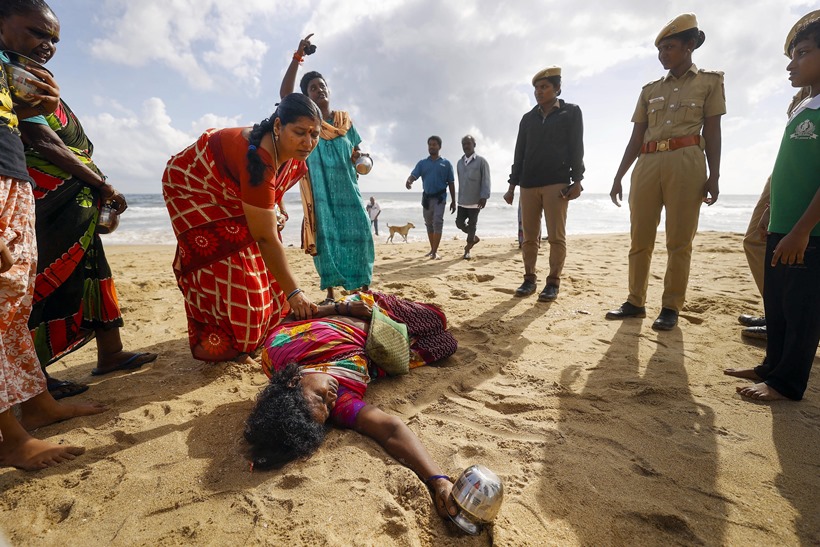
Over two decades ago, Kumar served as the project director and led an Indian team of marine experts that proposed, designed, and developed the country’s first Tsunami Early Warning System. This system was developed and came into operation in the wake of the deadly 2004 Indian Ocean tsunami that killed several thousand people along the Indian Ocean rim countries, including India.
Prior to assuming charge as the MoES secretary, he was serving at the Secretariat of the Indian Ocean Tsunami Warning and Mitigation System (IOTWMS) in Perth, Australia. Previously, he had served as a vice-chair of the Intergovernmental Oceanographic Commission (IOC) of UNESCO. The IOTWMS is a specialised program of the IOC, which is the ocean division of UNESCO. Comprising 153 countries, IOC is the UN’s lead agency for ocean science and for sustainable use and development of ocean resources.
During 2020-2024, Kumar helmed the MoES-Indian National Centre for Ocean Information and Services (INCOIS), Hyderabad. In fact, he was also one of the founding members of INCOIS, which was established in 1999.
During his tenure as the INCOIS director, the Indian fishing community was introduced to the specialised forecasts based on the identification of the potential fishing zone (PFZ). In addition, INCOIS introduced alerts to prevent coral reef bleaching along the north Indian Ocean region and worked on developing digital tools for multi-hazard vulnerability mapping.
Ocean scientist T Srinivasa Kumar was appointed on Thursday as the Secretary to the Ministry of Earth Sciences (MoES). He succeeds M Ravichandran, who superannuated in May this year.
Kumar holds a PhD from Berhampur University and will be the fifth full-time MoES secretary after the constitution of MoES in 2006. His tenure in New Delhi will be for two years. He is an expert in the Indian Ocean region and has specialised in satellite oceanography, coastal hazard mitigation and disaster management, remote sensing, and satellite technology.
Over two decades ago, Kumar served as the project director and led an Indian team of marine experts that proposed, designed, and developed the country’s first Tsunami Early Warning System. This system was developed and came into operation in the wake of the deadly 2004 Indian Ocean tsunami that killed several thousand people along the Indian Ocean rim countries, including India.
Prior to assuming charge as the MoES secretary, he was serving at the Secretariat of the Indian Ocean Tsunami Warning and Mitigation System (IOTWMS) in Perth, Australia. Previously, he had served as a vice-chair of the Intergovernmental Oceanographic Commission (IOC) of UNESCO. The IOTWMS is a specialised program of the IOC, which is the ocean division of UNESCO. Comprising 153 countries, IOC is the UN’s lead agency for ocean science and for sustainable use and development of ocean resources.
During 2020-2024, Kumar helmed the MoES-Indian National Centre for Ocean Information and Services (INCOIS), Hyderabad. In fact, he was also one of the founding members of INCOIS, which was established in 1999.
During his tenure as the INCOIS director, the Indian fishing community was introduced to the specialised forecasts based on the identification of the potential fishing zone (PFZ). In addition, INCOIS introduced alerts to prevent coral reef bleaching along the north Indian Ocean region and worked on developing digital tools for multi-hazard vulnerability mapping.