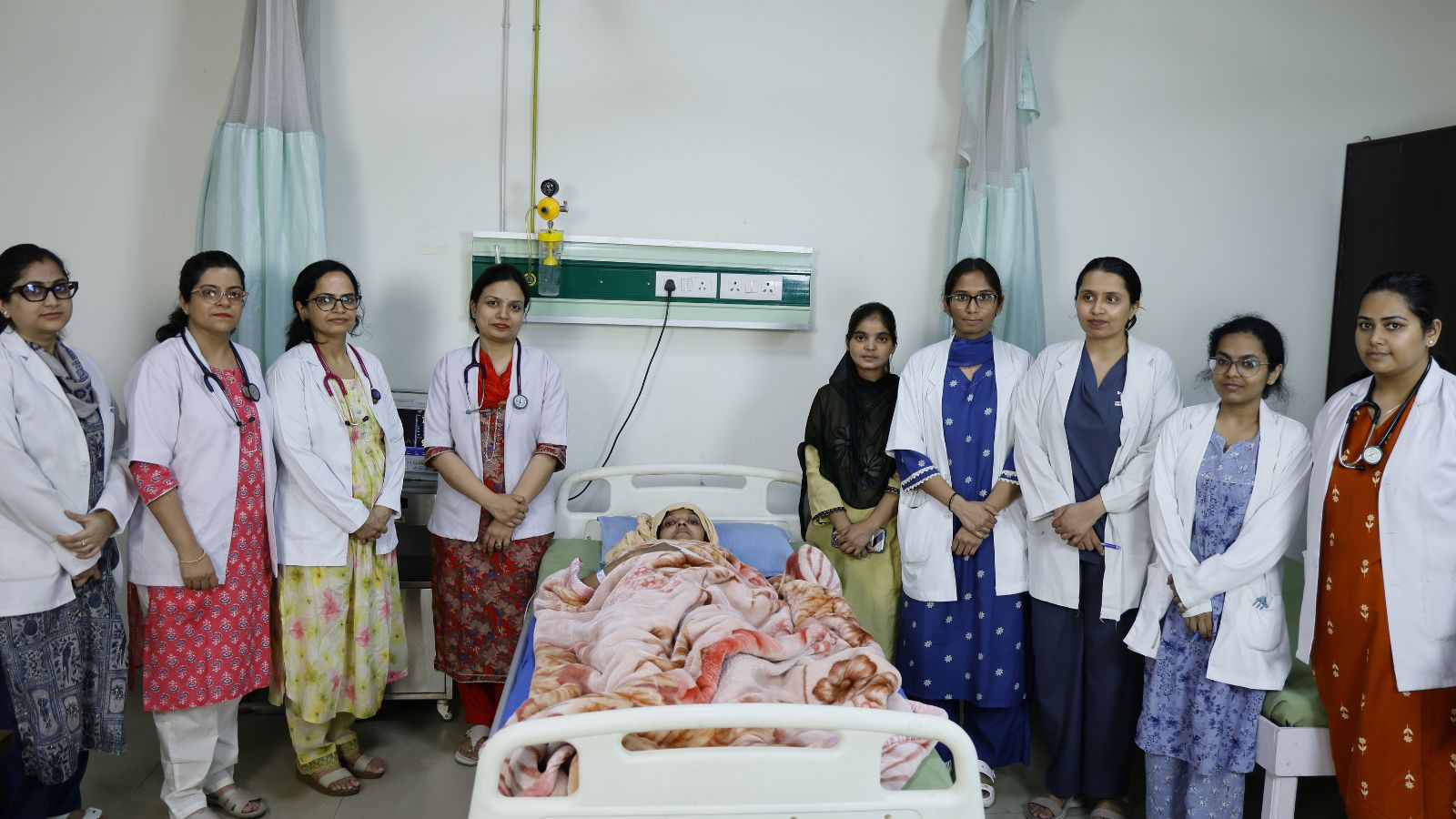


A rare delivery, and what comes after: The story of Amina, Alim and their quadruplets
The couple “left it to God”, as an anxious team got to work at Moradabad’s TMU Hospital for a '1 in 7 lakh' delivery. A week later, the labour of love, and faith, continues.
The chances of a natural quadruplet pregnancy, as per experts, are 1 in 7 lakh. An article in The Official Journal of Obstetrics and Gynaecology in India, published in 2007, said, “Only 48 such pregnancies are reported in world literature between 1900-1952.”
Amina Fatima, 25, and Mohammad Alim, 28, can tell you what those statistics don’t tell – about the before and after.
Between May 9 and May 14, her labour delayed and separated with the help of medicines, Amina delivered four babies – two boys and two girls – at Teerthanker Mahaveer University (TMU) Hospital in Moradabad. The quadruplets were conceived naturally, and also delivered naturally, in another rarity.
The first baby, born at 26 weeks of pregnancy on May 9, weighed only 710 gm. On May 14, Amina delivered another boy and two girls, weighing 900 gm, and roughly 600-700 gm, respectively.
On May 15, the infant born first, who was immediately administered surfactant that helps premature lungs breathe, developed pulmonary haemorrhage – a complication common among extremely premature infants. He didn’t survive.
The other three siblings remain in the Neonatal Intensive Care Unit (NICU), with doctors keeping an anxious watch.
Amina and Alim, who belong to adjacent villages Ratanpur Kala and Obri in Sambhal, got married in May 2024. It was an arranged marriage but the two had known each other since childhood.
Lying on the hospital bed, Amina, her voice rising barely above a whisper, says: “Everyone wants children after marriage. That’s what I wanted too.”
Amina’s mother had nine children, including a pair of twins. So when Alim and she first came to know after an ultrasound that she was carrying four foetuses, Amina says they were not unduly worried. “I prayed that all of them remain safe.”
But, as they consulted multiple hospitals, the first advice of doctors was “foetal reduction”. This involved the termination of one or more foetuses to improve the chances of survival of the others and reduce risks to the mother.
When they came to TMU, nearly 30 km from Sambhal, this is what Professor Shubra Agarwal, the doctor who led the obstetrics and gynaecology team at TMU, also told them. By then, Amina was in the third week of her pregnancy.
“In nearly 12 years of practice, this was the first time I saw a spontaneous quadruplet pregnancy… We advised Amina and her husband that carrying quadruplets till term was extremely difficult,” Agarwal told The Indian Express.
Agarwal has been with TMU, a private university with a hospital attached, since 2014. A multispeciality facility, the 20-year-old hospital sees around 2,000-2,500 patients daily, more than 80% of them from Amroha, Rampur, Moradabad, Sambhal, Bijnor and Uttarakhand’s Kumaon region. It has roughly 800-1,000 admitted patients at all times.
Dr Alka Kriplani, former head of the Department of Obstetrics and Gynaecology at AIIMS, also asserts the “extremely uncommon” nature of spontaneous quadruplet pregnancies. : “In my entire career, I have seen only two or three such cases.”
Amina says she considered the medical advice, but didn’t hesitate after doctors admitted they were not sure of the risks. Even if she chose to terminate one of the foetuses, they said, complications or pregnancy loss regarding the others were possible.
“I wanted to know if there was an injection so that, in the worst-case scenario, at least one baby would not be affected. But nobody could give us that guarantee,” she says.
So the couple chose faith instead. “Leave it to God,” they told doctors repeatedly.
Alim recalls telling the doctors: “Yeh Allah ki den hain, toh hum tohfa samajh ke rakh lenge (They are Allah’s gift, we accept them like a blessing).”
Alim, who runs a small grocery shop with his brother in Obri, earns between Rs 15,000 and Rs 20,000 a month. Theirs is a joint household of five members.
When doctors advised strict bed rest for Amina to ensure there were no risks to the quadruplets, everyday routines came to revolve around the pregnancy.
Alim started waking up early to cook breakfast before heading to the shop. His sister-in-law helped, as did relatives.
As the pregnancy became physically exhausting, Amina struggled to eat. Her weight dropped instead of increasing. She survived mostly on coconut water, fruits and small meals.
From the fourth month on, doctors stepped up the monitoring to checks every two weeks. Then, when Amina had just finished 26 weeks, she went into labour.
She delivered the first baby on May 9. Soon after, to the surprise of the doctors, her contractions stopped.
Because the remaining three babies were still stable inside separate amniotic sacs and there were appeared to be no infection, doctors attempted what they call “a delayed interval delivery”, essentially a medical approach in which labour is temporarily halted to prolong the pregnancy and improve the survival chances of the remaining foetuses.
Five days later, Amina delivered the other three babies.
Dr M P Singh, Dean of Student Welfare at TMU, who also oversees media communications, says it was “the first case of quadruplets” since the hospital was established. “We treated Amina free of cost and have supported her family under the TMU Poshan Yojana by paying her Rs 4,000 (one-time payment).”
Dr Aditi Rawat, the NICU in-charge and consulting neonatologist at TMU, says Amina’s babies fall in the highest-risk category of newborn care: extremely premature and extremely low birth weight babies. “The mortality rate in babies born before 28 weeks and below 900 grams is between 50% and 80%,” she says.
One complication is that the babies, given how small they are, cannot yet drink milk. Their lungs, intestines and other organs remain underdeveloped. Nutrition is being administered intravenously, with doctors monitoring oxygen saturation, blood gases, urine output and pulse rates almost hourly.
A fragile Amina spends most of her time on the hospital bed, in a ward with over 10 other patients. Alim sleeps at night outside along with relatives.
As their three babies fight against the odds in incubators, the 28-year-old admits he often debates if they were right in keeping all the four foetuses. “When doctors tell you there are complications, when they say ventilators are needed, there is fear… Maybe we should have listened. At that time, we only thought positively,” he says.
But almost immediately, Alim pulls himself together. “Whatever happens, happens for the best. We hope that our children come out safe.”
Since Amina was admitted, Alim has gone back to the village only once, for a brief while last week to bury their firstborn. They were yet to name him or the others, having decided to leave it till after they were at home.
Before that, Alim must face one more thing: break the news to Amina that one of their children didn’t make it. He fears she is too weak to deal with the blow. When she demands to see the babies, he leads her to the glass window looking into the NICU – and lets her draw her own conclusions.
Stay updated with the latest - Click here to follow us on Instagram
The chances of a natural quadruplet pregnancy, as per experts, are 1 in 7 lakh. An article in The Official Journal of Obstetrics and Gynaecology in India, published in 2007, said, “Only 48 such pregnancies are reported in world literature between 1900-1952.”
Amina Fatima, 25, and Mohammad Alim, 28, can tell you what those statistics don’t tell – about the before and after.
Between May 9 and May 14, her labour delayed and separated with the help of medicines, Amina delivered four babies – two boys and two girls – at Teerthanker Mahaveer University (TMU) Hospital in Moradabad. The quadruplets were conceived naturally, and also delivered naturally, in another rarity.
The first baby, born at 26 weeks of pregnancy on May 9, weighed only 710 gm. On May 14, Amina delivered another boy and two girls, weighing 900 gm, and roughly 600-700 gm, respectively.
On May 15, the infant born first, who was immediately administered surfactant that helps premature lungs breathe, developed pulmonary haemorrhage – a complication common among extremely premature infants. He didn’t survive.
The other three siblings remain in the Neonatal Intensive Care Unit (NICU), with doctors keeping an anxious watch.
Amina and Alim, who belong to adjacent villages Ratanpur Kala and Obri in Sambhal, got married in May 2024. It was an arranged marriage but the two had known each other since childhood.
Lying on the hospital bed, Amina, her voice rising barely above a whisper, says: “Everyone wants children after marriage. That’s what I wanted too.”
Amina’s mother had nine children, including a pair of twins. So when Alim and she first came to know after an ultrasound that she was carrying four foetuses, Amina says they were not unduly worried. “I prayed that all of them remain safe.”
But, as they consulted multiple hospitals, the first advice of doctors was “foetal reduction”. This involved the termination of one or more foetuses to improve the chances of survival of the others and reduce risks to the mother.
When they came to TMU, nearly 30 km from Sambhal, this is what Professor Shubra Agarwal, the doctor who led the obstetrics and gynaecology team at TMU, also told them. By then, Amina was in the third week of her pregnancy.
“In nearly 12 years of practice, this was the first time I saw a spontaneous quadruplet pregnancy… We advised Amina and her husband that carrying quadruplets till term was extremely difficult,” Agarwal told The Indian Express.
Agarwal has been with TMU, a private university with a hospital attached, since 2014. A multispeciality facility, the 20-year-old hospital sees around 2,000-2,500 patients daily, more than 80% of them from Amroha, Rampur, Moradabad, Sambhal, Bijnor and Uttarakhand’s Kumaon region. It has roughly 800-1,000 admitted patients at all times.
Dr Alka Kriplani, former head of the Department of Obstetrics and Gynaecology at AIIMS, also asserts the “extremely uncommon” nature of spontaneous quadruplet pregnancies. : “In my entire career, I have seen only two or three such cases.”
Amina says she considered the medical advice, but didn’t hesitate after doctors admitted they were not sure of the risks. Even if she chose to terminate one of the foetuses, they said, complications or pregnancy loss regarding the others were possible.
“I wanted to know if there was an injection so that, in the worst-case scenario, at least one baby would not be affected. But nobody could give us that guarantee,” she says.
So the couple chose faith instead. “Leave it to God,” they told doctors repeatedly.
Alim recalls telling the doctors: “Yeh Allah ki den hain, toh hum tohfa samajh ke rakh lenge (They are Allah’s gift, we accept them like a blessing).”
Alim, who runs a small grocery shop with his brother in Obri, earns between Rs 15,000 and Rs 20,000 a month. Theirs is a joint household of five members.
When doctors advised strict bed rest for Amina to ensure there were no risks to the quadruplets, everyday routines came to revolve around the pregnancy.
Alim started waking up early to cook breakfast before heading to the shop. His sister-in-law helped, as did relatives.
As the pregnancy became physically exhausting, Amina struggled to eat. Her weight dropped instead of increasing. She survived mostly on coconut water, fruits and small meals.
From the fourth month on, doctors stepped up the monitoring to checks every two weeks. Then, when Amina had just finished 26 weeks, she went into labour.
She delivered the first baby on May 9. Soon after, to the surprise of the doctors, her contractions stopped.
Because the remaining three babies were still stable inside separate amniotic sacs and there were appeared to be no infection, doctors attempted what they call “a delayed interval delivery”, essentially a medical approach in which labour is temporarily halted to prolong the pregnancy and improve the survival chances of the remaining foetuses.
Five days later, Amina delivered the other three babies.
Dr M P Singh, Dean of Student Welfare at TMU, who also oversees media communications, says it was “the first case of quadruplets” since the hospital was established. “We treated Amina free of cost and have supported her family under the TMU Poshan Yojana by paying her Rs 4,000 (one-time payment).”
Dr Aditi Rawat, the NICU in-charge and consulting neonatologist at TMU, says Amina’s babies fall in the highest-risk category of newborn care: extremely premature and extremely low birth weight babies. “The mortality rate in babies born before 28 weeks and below 900 grams is between 50% and 80%,” she says.
One complication is that the babies, given how small they are, cannot yet drink milk. Their lungs, intestines and other organs remain underdeveloped. Nutrition is being administered intravenously, with doctors monitoring oxygen saturation, blood gases, urine output and pulse rates almost hourly.
A fragile Amina spends most of her time on the hospital bed, in a ward with over 10 other patients. Alim sleeps at night outside along with relatives.
As their three babies fight against the odds in incubators, the 28-year-old admits he often debates if they were right in keeping all the four foetuses. “When doctors tell you there are complications, when they say ventilators are needed, there is fear… Maybe we should have listened. At that time, we only thought positively,” he says.
But almost immediately, Alim pulls himself together. “Whatever happens, happens for the best. We hope that our children come out safe.”
Since Amina was admitted, Alim has gone back to the village only once, for a brief while last week to bury their firstborn. They were yet to name him or the others, having decided to leave it till after they were at home.
Before that, Alim must face one more thing: break the news to Amina that one of their children didn’t make it. He fears she is too weak to deal with the blow. When she demands to see the babies, he leads her to the glass window looking into the NICU – and lets her draw her own conclusions.