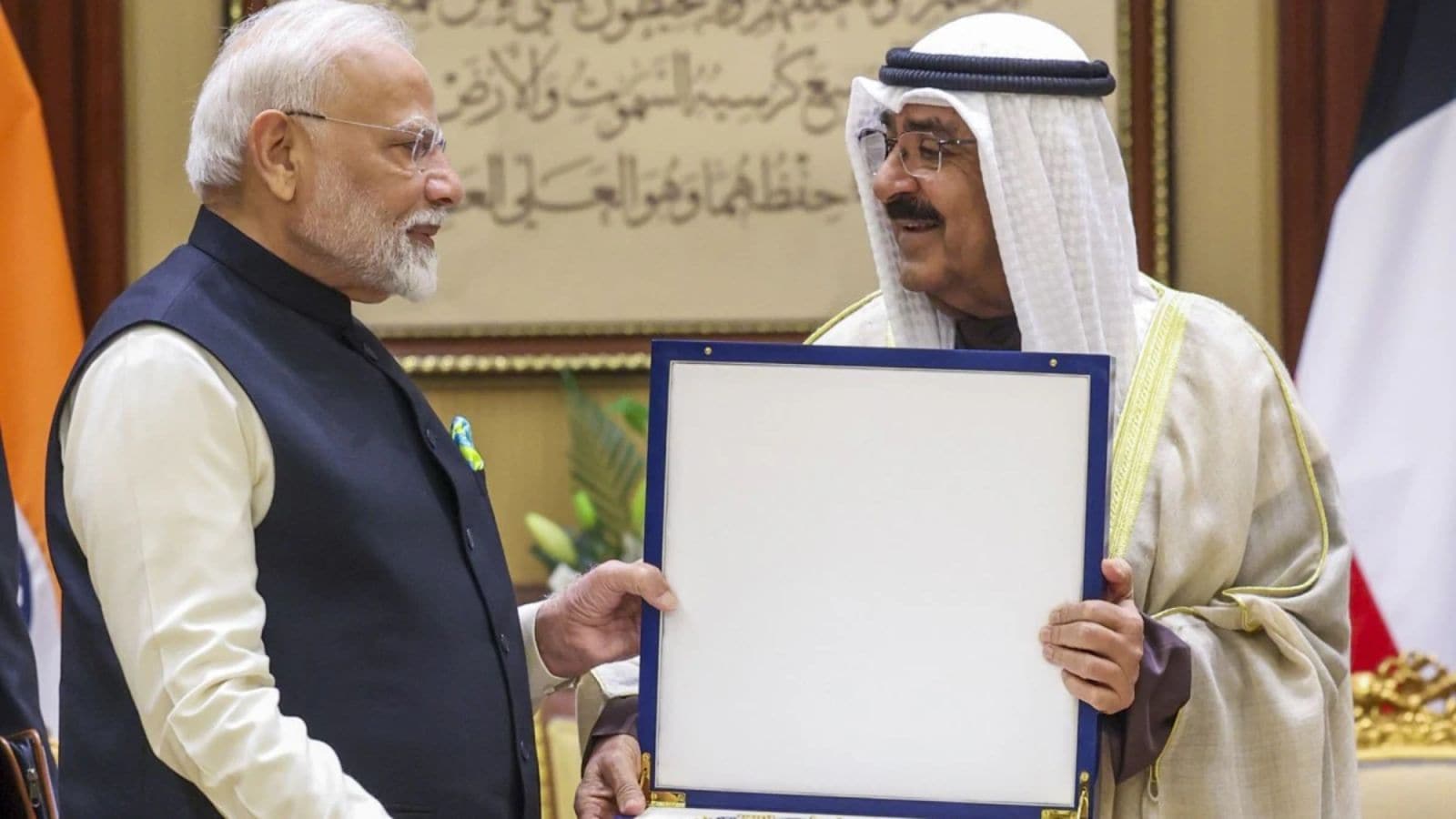


PM Modi speaks to Amir of Kuwait, expresses concern over escalation of tensions in West Asia
The PM also reaffirmed India’s strong condemnation of attacks on Kuwait’s sovereignty and territorial integrity. This came days after an Indian national was killed in an Iranian attack on Kuwait International Airport that reportedly left more than 60 injured.
Prime Minister Narendra Modi on Tuesday spoke to the Amir of Kuwait, Sheikh Meshal Al-Ahmad Al-Jaber Al Sabah, and expressed deep concern over the escalation of tensions in West Asia while reaffirming India’s strong condemnation of attacks on Kuwait’s sovereignty and territorial integrity.
This came days after an Indian national was killed in an Iranian attack on Kuwait International Airport that reportedly left more than 60 injured.
According to a statement by the PM’s office on Tuesday, “The two leaders exchanged views on the evolving security situation in West Asia.” This discussion between PM Modi and the Amir of Kuwait took place days after Israel and Iran attacked each other over the weekend, in the first significant escalation since the fragile ceasefire was agreed in April this year.
FOR LIVE UPDATES ON IRAN WAR, CLICK HERE
“Prime Minister expressed deep concern over the escalation of tensions and reaffirmed India’s strong condemnation of attacks on Kuwait’s sovereignty and territorial integrity… Prime Minister reiterated the call for de-escalation, dialogue and diplomacy for earliest restoration of peace and stability,” it added.
“Prime Minister thanked His Highness the Amir for his personal attention to the continued well-being and the safety of the large Indian community in Kuwait,” according to the PMO statement.
This is the first phone conversation between the two leaders since the war in West Asia broke out on February 28. Earlier this year, on March 3 and March 18, PM Modi had telephonic conversations regarding regional stability with Kuwait’s Crown Prince, Sheikh Sabah Al-Khaled Al-Hamad Al-Mubarak Al-Sabah.
Last week, India had condemned the attack on Kuwait airport while renewing calls for an end to violence while urging strongly not to target civilian population and civilian infrastructure.
“Since the onset of the conflict in West Asia, we have strongly urged that civilian population and civilian infrastructure must not be targeted. We again call upon parties to cease such attacks,” the Ministry of External Affairs (MEA) had said in a statement.
In a post on X, the Embassy of India in Kuwait said it is “closely coordinating” with the Kuwaiti authorities to extend all possible support and assistance to the bereaved family as well as those injured in the incident last Wednesday.
The deceased was identified as Manzoor Ahmed, a 55-year-tailor from Madhya Pradesh. This latest death put the total number of Indian fatalities to at least 10 since hostilities broke out between Iran and US-Israel on February 28.
“We extend our sincere condolences and sympathies to the family of the deceased and his relatives, and we wish a speedy recovery to all the injured,” said Colonel Saud Abdulaziz Al-Otaibi, the official spokesman of Kuwait’s Ministry of Defence.
Kuwaiti Interior Ministry spokesperson Brigadier General Nasser Bousleeb said that the passenger terminal (T1) at the airport was subjected to an attack by several hostile drones.
The Kuwaiti foreign ministry later summoned the Charge d’Affaires at the Iranian Embassy and handed him an official protest note regarding the attacks.
Prime Minister Narendra Modi on Tuesday spoke to the Amir of Kuwait, Sheikh Meshal Al-Ahmad Al-Jaber Al Sabah, and expressed deep concern over the escalation of tensions in West Asia while reaffirming India’s strong condemnation of attacks on Kuwait’s sovereignty and territorial integrity.
This came days after an Indian national was killed in an Iranian attack on Kuwait International Airport that reportedly left more than 60 injured.
According to a statement by the PM’s office on Tuesday, “The two leaders exchanged views on the evolving security situation in West Asia.” This discussion between PM Modi and the Amir of Kuwait took place days after Israel and Iran attacked each other over the weekend, in the first significant escalation since the fragile ceasefire was agreed in April this year.
FOR LIVE UPDATES ON IRAN WAR, CLICK HERE
“Prime Minister expressed deep concern over the escalation of tensions and reaffirmed India’s strong condemnation of attacks on Kuwait’s sovereignty and territorial integrity… Prime Minister reiterated the call for de-escalation, dialogue and diplomacy for earliest restoration of peace and stability,” it added.
“Prime Minister thanked His Highness the Amir for his personal attention to the continued well-being and the safety of the large Indian community in Kuwait,” according to the PMO statement.
This is the first phone conversation between the two leaders since the war in West Asia broke out on February 28. Earlier this year, on March 3 and March 18, PM Modi had telephonic conversations regarding regional stability with Kuwait’s Crown Prince, Sheikh Sabah Al-Khaled Al-Hamad Al-Mubarak Al-Sabah.
Last week, India had condemned the attack on Kuwait airport while renewing calls for an end to violence while urging strongly not to target civilian population and civilian infrastructure.
“Since the onset of the conflict in West Asia, we have strongly urged that civilian population and civilian infrastructure must not be targeted. We again call upon parties to cease such attacks,” the Ministry of External Affairs (MEA) had said in a statement.
In a post on X, the Embassy of India in Kuwait said it is “closely coordinating” with the Kuwaiti authorities to extend all possible support and assistance to the bereaved family as well as those injured in the incident last Wednesday.
The deceased was identified as Manzoor Ahmed, a 55-year-tailor from Madhya Pradesh. This latest death put the total number of Indian fatalities to at least 10 since hostilities broke out between Iran and US-Israel on February 28.
“We extend our sincere condolences and sympathies to the family of the deceased and his relatives, and we wish a speedy recovery to all the injured,” said Colonel Saud Abdulaziz Al-Otaibi, the official spokesman of Kuwait’s Ministry of Defence.
Kuwaiti Interior Ministry spokesperson Brigadier General Nasser Bousleeb said that the passenger terminal (T1) at the airport was subjected to an attack by several hostile drones.
The Kuwaiti foreign ministry later summoned the Charge d’Affaires at the Iranian Embassy and handed him an official protest note regarding the attacks.