

From Maoist stronghold to tap water: Remote Abujhmad village gets first home supply
Last April, security forces set up a police camp, clearing the security vacuum and easing Naxal influence in the area. It was only last year that Abujhmad, long seen as a Maoist stronghold since the 1980s, was largely freed of such influence.
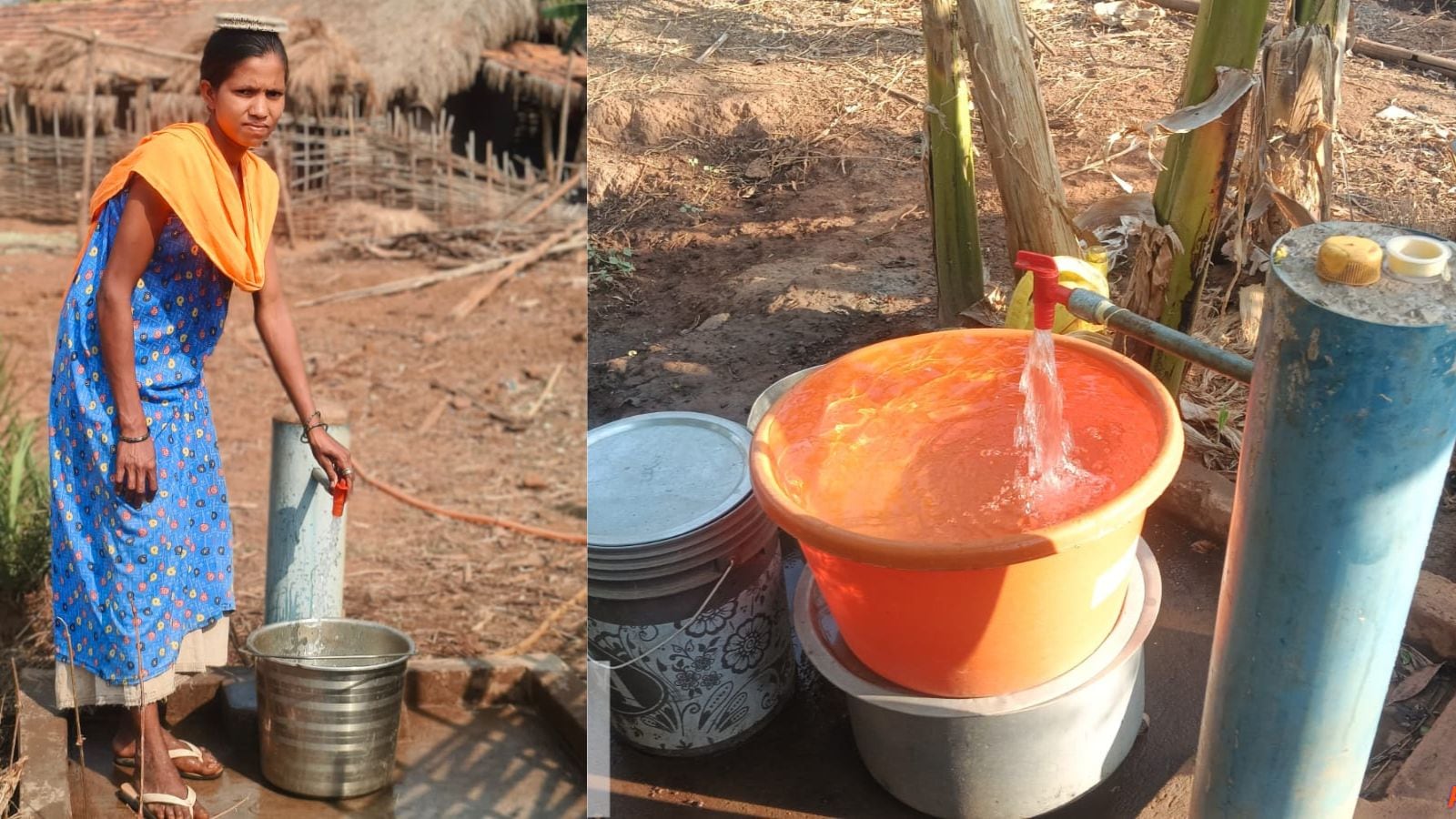
Until a few days ago, over 100 residents of Nelangur, a hilly village deep inside the forests of Chhattisgarh’s Abujhmad, depended entirely on water streams and faced acute shortages, especially in summer. That changed last week when the government, under the Jal Jeevan Mission, provided tap water connections to homes.
Nelangur is among the remotest villages, located on hilly terrain about 52 km from the Narayanpur district headquarters and nearly 8 km from Kuwakodi village in Maharashtra’s Bhamragad taluka.
Last April, security forces set up a police camp, clearing the security vacuum and easing Naxal influence in the area. It was only last year that Abujhmad, long seen as a Maoist stronghold since the 1980s, was largely freed of such influence.
The village has a population of 115 people from 35 families. While nearby villages still depend on streams, these families now have reason to smile, no longer needing to travel long distances for water.
Confirming the development, Narayanpur Collector Namrata Jain said: “A water supply system has been set up in the village under the Jal Jeevan Mission. Water is being lifted from the source using a solar pump and supplied directly to homes through pipelines. All families are covered. This has reduced dependence on electricity and ensured steady supply. Women no longer need to travel long distances to fetch water. The availability of water at home has eased daily routines and led to better awareness of hygiene”.
At present, the village has no electricity line or mobile network, though efforts are underway to provide power soon. “Construction of National Highway 130D began last year and is underway. Once completed, it will boost economic activity in the village,” an official said.
For healthcare, villagers travel to a centre 3 km away in Padamkot. An anganwadi has been made functional, and a concrete school building is under construction.
Stay updated with the latest - Click here to follow us on Instagram
Until a few days ago, over 100 residents of Nelangur, a hilly village deep inside the forests of Chhattisgarh’s Abujhmad, depended entirely on water streams and faced acute shortages, especially in summer. That changed last week when the government, under the Jal Jeevan Mission, provided tap water connections to homes.
Nelangur is among the remotest villages, located on hilly terrain about 52 km from the Narayanpur district headquarters and nearly 8 km from Kuwakodi village in Maharashtra’s Bhamragad taluka.
Last April, security forces set up a police camp, clearing the security vacuum and easing Naxal influence in the area. It was only last year that Abujhmad, long seen as a Maoist stronghold since the 1980s, was largely freed of such influence.
The village has a population of 115 people from 35 families. While nearby villages still depend on streams, these families now have reason to smile, no longer needing to travel long distances for water.
Confirming the development, Narayanpur Collector Namrata Jain said: “A water supply system has been set up in the village under the Jal Jeevan Mission. Water is being lifted from the source using a solar pump and supplied directly to homes through pipelines. All families are covered. This has reduced dependence on electricity and ensured steady supply. Women no longer need to travel long distances to fetch water. The availability of water at home has eased daily routines and led to better awareness of hygiene”.
At present, the village has no electricity line or mobile network, though efforts are underway to provide power soon. “Construction of National Highway 130D began last year and is underway. Once completed, it will boost economic activity in the village,” an official said.
For healthcare, villagers travel to a centre 3 km away in Padamkot. An anganwadi has been made functional, and a concrete school building is under construction.