

Centre’s panel recommends in-principle forest diversion nod for Kirthai-II project
Kirthai-II is the third hydroelectric project planned on the Chenab to receive approvals since the suspension of the Indus Water Treaty.
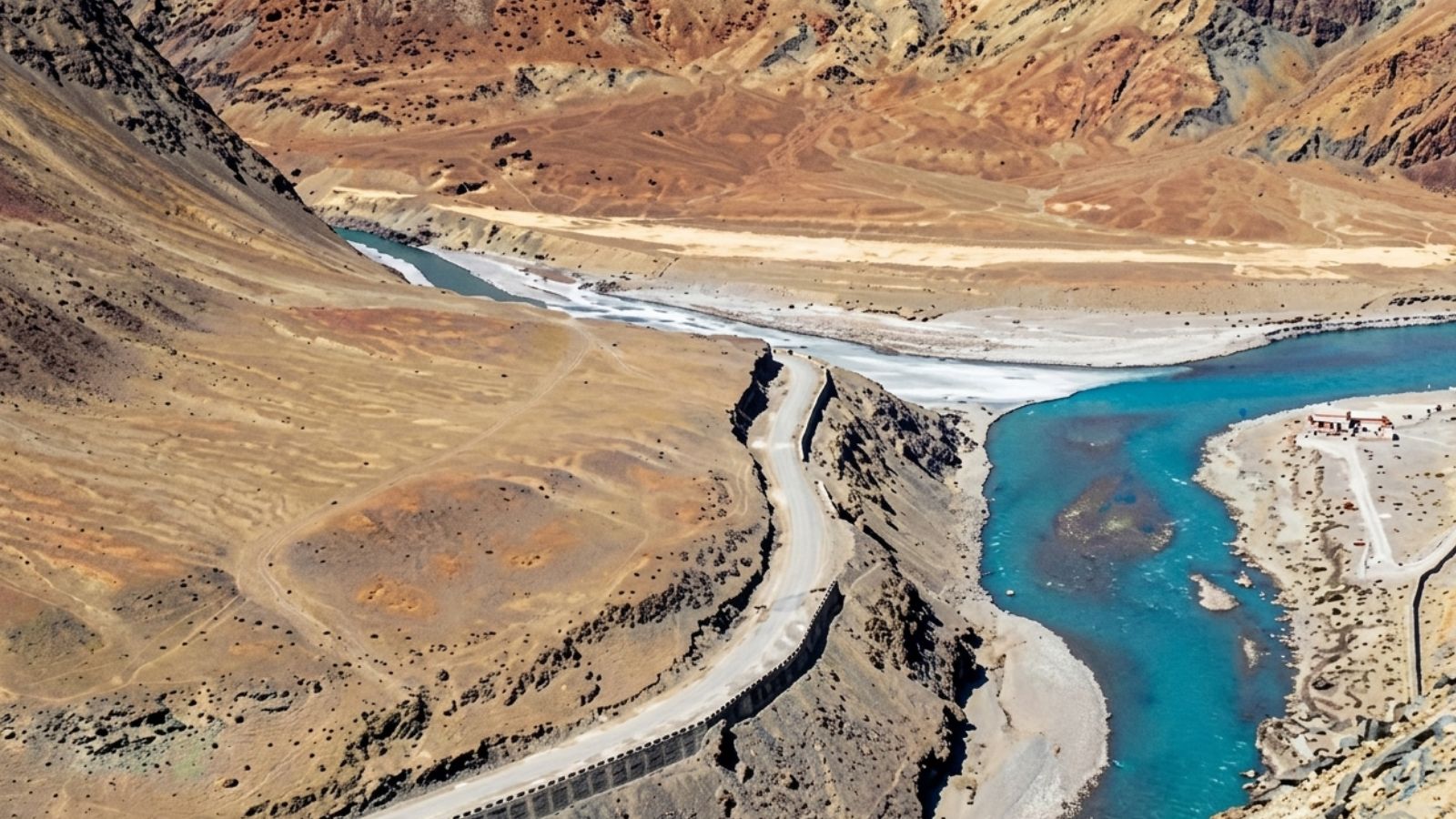
The Forest Advisory Committee (FAC) of the Ministry of Environment, Forest and Climate Change has recommended in-principle approval for diversion of 197 hectares of forest land for the 820 MW Kirthai-II hydroelectric project on the Chenab River in Jammu and Kashmir.
The project was recommended for a grant of environmental clearance in 2021, but was subject to the grant of in-principle forest clearance as the project site is located in a moderate to dense, high-mountainous forest area.
Kirthai-II becomes the third hydroelectric project planned on the Chenab to receive approvals from the Environment Ministry since the suspension of the Indus Water Treaty in the wake of the Pahalgam terror attack.
The Centre has moved to expedite hydel projects stalled or proposed in the Indus basin since the Treaty’s suspension. Sawalkote, Dulhasti–II, Ratle, Pakal Dul, Kwar, Kiru, and Kirthai Stage I and II are some of the projects planned on the Chenab River.
Under IWT, Pakistan controlled the waters of the Indus, Jhelum, and Chenab, while India controlled the waters of the Ravi, Beas, and Sutlej.
Even as multiple projects are proposed in the Chenab basin, the Jammu and Kashmir administration has dispensed with the requirement for cumulative impact assessment and carrying capacity for the Indus, Chenab, and Jhelum, in view of their strategic nature and the need to fully utilise their water.
Reduced proposed capacity
The in-principle forest clearance was recommended during FAC’s June 10 meeting, as per the minutes of its meeting.
FAC’s minutes show Kirthai–II will be a run-of-the-river project, and its original proposed capacity of 930 MW has now been reduced to 820 MW.
As per the project documents, Kirthai–I is upstream, and the Kiru project is downstream of Kirthai–II. A 121-metre-high concrete gravity dam will be constructed in Padder tehsil of Kishtwar district.
As many as 8,723 trees will be felled for the project site, which features dense forest comprising Pine species, Silver Fir, Oak species, and other temperate and broadleaf trees.
The project site is a natural habitat of Chilgoza Pine trees. The Himalayan Tahr, Asiatic Black Bear, Himalayan Brown Bear, and Asiatic Ibex are also present on the project site, the divisional forest officer said in his report to the FAC.
The ministry panel has directed the implementation of a wildlife biodiversity management plan and habitat management plan, including an animal passage plan.
The project will be implemented by the Chenab Valley Power Projects Ltd, a joint venture of the National Hydroelectric Power Corporation and the Jammu and Kashmir State Power Development Corporation Limited.
The Forest Advisory Committee (FAC) of the Ministry of Environment, Forest and Climate Change has recommended in-principle approval for diversion of 197 hectares of forest land for the 820 MW Kirthai-II hydroelectric project on the Chenab River in Jammu and Kashmir.
The project was recommended for a grant of environmental clearance in 2021, but was subject to the grant of in-principle forest clearance as the project site is located in a moderate to dense, high-mountainous forest area.
Kirthai-II becomes the third hydroelectric project planned on the Chenab to receive approvals from the Environment Ministry since the suspension of the Indus Water Treaty in the wake of the Pahalgam terror attack.
The Centre has moved to expedite hydel projects stalled or proposed in the Indus basin since the Treaty’s suspension. Sawalkote, Dulhasti–II, Ratle, Pakal Dul, Kwar, Kiru, and Kirthai Stage I and II are some of the projects planned on the Chenab River.
Under IWT, Pakistan controlled the waters of the Indus, Jhelum, and Chenab, while India controlled the waters of the Ravi, Beas, and Sutlej.
Even as multiple projects are proposed in the Chenab basin, the Jammu and Kashmir administration has dispensed with the requirement for cumulative impact assessment and carrying capacity for the Indus, Chenab, and Jhelum, in view of their strategic nature and the need to fully utilise their water.
Reduced proposed capacity
The in-principle forest clearance was recommended during FAC’s June 10 meeting, as per the minutes of its meeting.
FAC’s minutes show Kirthai–II will be a run-of-the-river project, and its original proposed capacity of 930 MW has now been reduced to 820 MW.
As per the project documents, Kirthai–I is upstream, and the Kiru project is downstream of Kirthai–II. A 121-metre-high concrete gravity dam will be constructed in Padder tehsil of Kishtwar district.
As many as 8,723 trees will be felled for the project site, which features dense forest comprising Pine species, Silver Fir, Oak species, and other temperate and broadleaf trees.
The project site is a natural habitat of Chilgoza Pine trees. The Himalayan Tahr, Asiatic Black Bear, Himalayan Brown Bear, and Asiatic Ibex are also present on the project site, the divisional forest officer said in his report to the FAC.
The ministry panel has directed the implementation of a wildlife biodiversity management plan and habitat management plan, including an animal passage plan.
The project will be implemented by the Chenab Valley Power Projects Ltd, a joint venture of the National Hydroelectric Power Corporation and the Jammu and Kashmir State Power Development Corporation Limited.