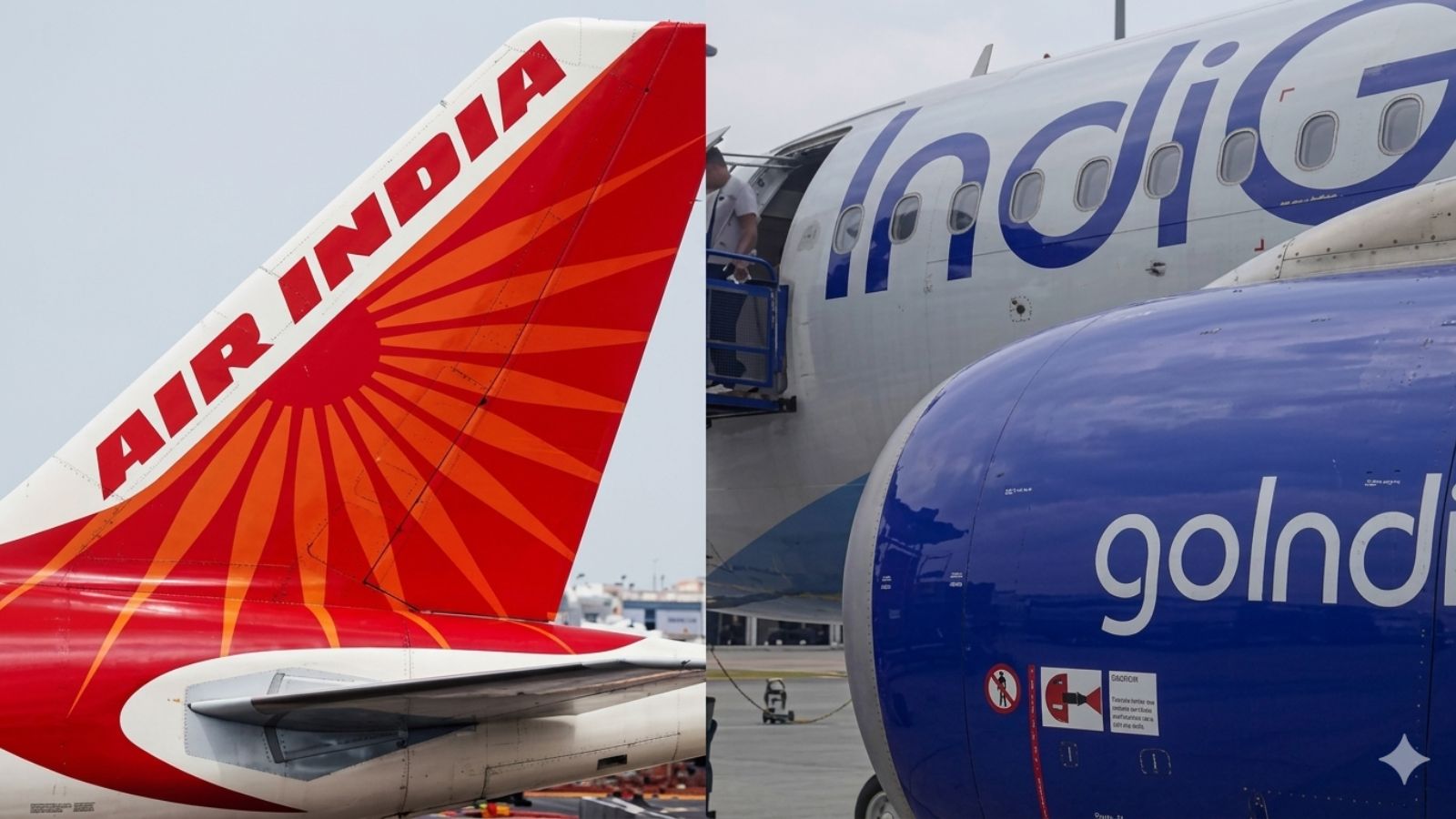


Why Indian airlines may stop flying: Air India, IndiGo send SOS to government
Indian airlines are facing the brunt of the West Asia war in twin forms: higher oil prices, and airspace restrictions forcing them to take longer routes.
Air India, IndiGo and SpiceJet have said they are on the verge of “stopping operations” and have sought the government’s “urgent intervention” amid high jet fuel prices. The country’s top airlines are facing the double whammy of higher aviation turbine fuel (ATF) prices and longer routes due to war-related airspace restrictions.
Airline industry body Federation of Indian Airlines (FIA) has written to the civil aviation ministry, and outlined a few steps to prevent “unsurmountable losses for airlines and grounding of aircraft”, news agency PTI reported.
Airlines incur nearly 40 per cent of their operational expenses on procuring jet fuel. The West Asia turmoil has pushed up oil prices, and airspace restrictions have increased airlines’ operating costs, especially on long-haul routes.
Jet fuel prices have grown considerably and differential between crude and ATF is challenging the operation of airlines “in totality”, it said.
Airlines flag ‘unsurmountable losses’
“… any ad hoc pricing (domestic vs international) and/or irrational increase in the price of ATF will result in unsurmountable losses for airlines and will lead to grounding of aircraft, resulting in cancellation of flights,” the federation, which represents Air India, IndiGo and SpiceJet, said.
“In order to survive, sustain and continue operation, we request your urgent intervention for immediate and meaningful financial support to tide over the current situation,” it said in a letter on April 26.
The airlines have also requested the government to temporarily defer excise duty on ATF, which is at 11 per cent currently.
“With the abnormal increase in ATF prices from the pre-crisis period, adding rupee depreciation to the increased prices, the 11 per cent excise duty also increases manifold for the airlines and adds to the ATF price as a big impact on airlines,” they said.
Last month, the government limited the hike in ATF price to Rs 15 per litre for domestic operations. For international operations, the price rose by Rs 73 per litre.
International flights ‘completely unviable’
The airlines said the situation has practically made international operations, along with domestic operations, “completely unviable” and resulted in significant losses for the aviation sector in April.
FIA sought “urgent intervention” and said the current situation is creating a severe imbalance in domestic and international operations. This also making airline networks unviable and unsustainable.
“The airline industry in India is under extreme stress and is on the verge of closing down or of stopping its operations.”
According to FIA, the country’s largest aviation hub Delhi has the second-highest value-added tax (VAT) of 25 per cent on jet fuel, while the highest rate is 29 per cent levied in Tamil Nadu.
“The other major aviation cities, viz. Mumbai, Bangalore, Hyderabad, and Kolkata range between 16 per cent and 20 per cent. These 6 cities cover more than 50 per cent of airlines’ operations within India,” the federation said.
With inputs from PTI
Stay updated with the latest - Click here to follow us on Instagram
Air India, IndiGo and SpiceJet have said they are on the verge of “stopping operations” and have sought the government’s “urgent intervention” amid high jet fuel prices. The country’s top airlines are facing the double whammy of higher aviation turbine fuel (ATF) prices and longer routes due to war-related airspace restrictions.
Airline industry body Federation of Indian Airlines (FIA) has written to the civil aviation ministry, and outlined a few steps to prevent “unsurmountable losses for airlines and grounding of aircraft”, news agency PTI reported.
Airlines incur nearly 40 per cent of their operational expenses on procuring jet fuel. The West Asia turmoil has pushed up oil prices, and airspace restrictions have increased airlines’ operating costs, especially on long-haul routes.
Jet fuel prices have grown considerably and differential between crude and ATF is challenging the operation of airlines “in totality”, it said.
Airlines flag ‘unsurmountable losses’
“… any ad hoc pricing (domestic vs international) and/or irrational increase in the price of ATF will result in unsurmountable losses for airlines and will lead to grounding of aircraft, resulting in cancellation of flights,” the federation, which represents Air India, IndiGo and SpiceJet, said.
“In order to survive, sustain and continue operation, we request your urgent intervention for immediate and meaningful financial support to tide over the current situation,” it said in a letter on April 26.
The airlines have also requested the government to temporarily defer excise duty on ATF, which is at 11 per cent currently.
“With the abnormal increase in ATF prices from the pre-crisis period, adding rupee depreciation to the increased prices, the 11 per cent excise duty also increases manifold for the airlines and adds to the ATF price as a big impact on airlines,” they said.
Last month, the government limited the hike in ATF price to Rs 15 per litre for domestic operations. For international operations, the price rose by Rs 73 per litre.
International flights ‘completely unviable’
The airlines said the situation has practically made international operations, along with domestic operations, “completely unviable” and resulted in significant losses for the aviation sector in April.
FIA sought “urgent intervention” and said the current situation is creating a severe imbalance in domestic and international operations. This also making airline networks unviable and unsustainable.
“The airline industry in India is under extreme stress and is on the verge of closing down or of stopping its operations.”
According to FIA, the country’s largest aviation hub Delhi has the second-highest value-added tax (VAT) of 25 per cent on jet fuel, while the highest rate is 29 per cent levied in Tamil Nadu.
“The other major aviation cities, viz. Mumbai, Bangalore, Hyderabad, and Kolkata range between 16 per cent and 20 per cent. These 6 cities cover more than 50 per cent of airlines’ operations within India,” the federation said.
With inputs from PTI