

‘Beaten, warned against leaving’: 100 tribal workers from Jharkhand flee Tamil Nadu textile factory
‘There were problems with food, rules and behaviour of staff. When we raised our concerns and told them about leaving the factory, they started assaulting us and warned us not to leave,’ a worker said. CM Soren has taken cognisance.
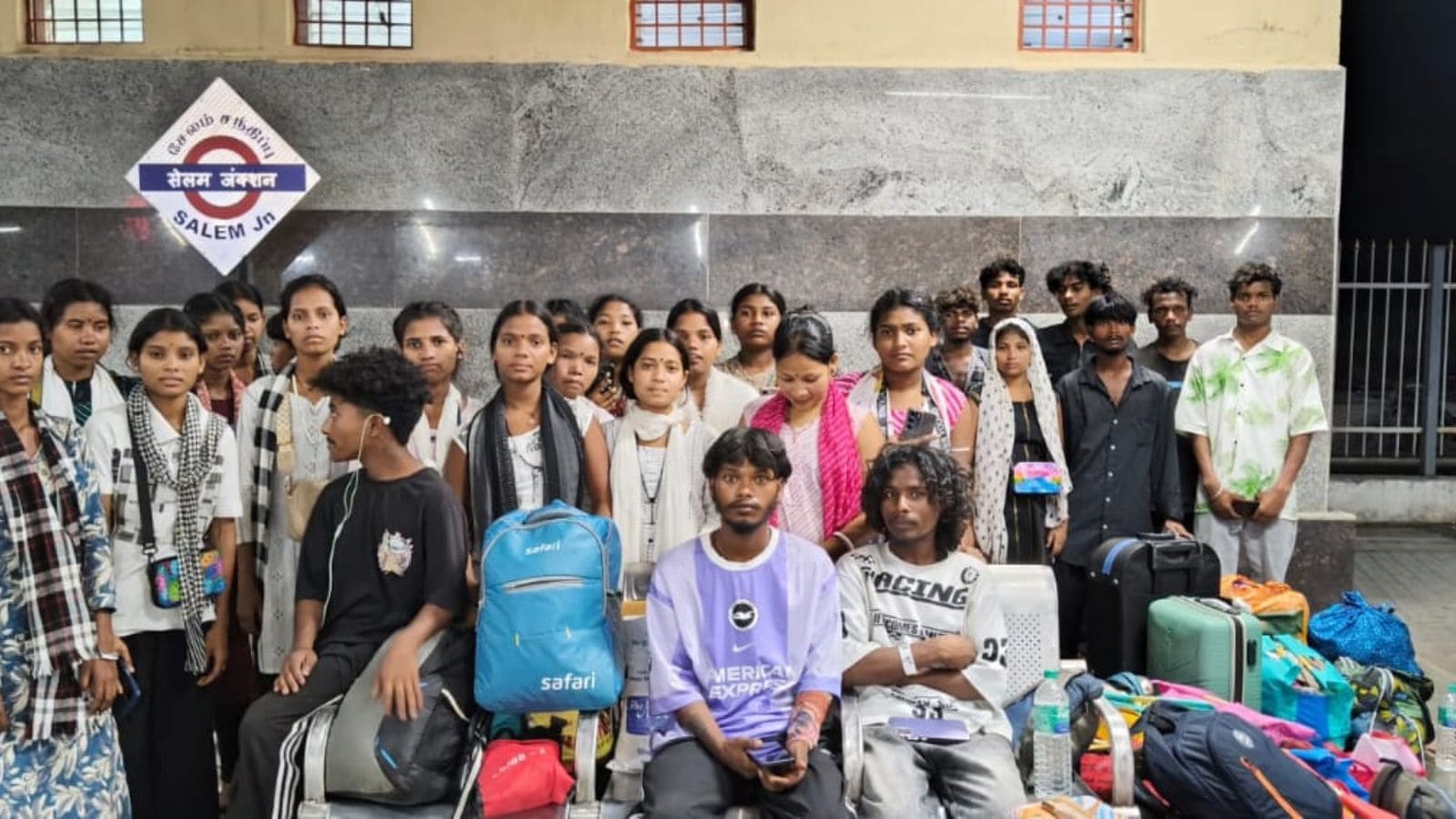
A group of around 100 migrant Adivasi workers from Jharkhand’s West Singhbhum district have returned home over the past two days, alleging physical assault and non-payment of wages at a textile factory in Tamil Nadu’s Namakkal.
Anil Samad, a resident of the Chakradharpur area, told The Indian Express that he and many workers from his group made their way back after tensions escalated at the factory. “Many youths have been working there for the last couple of years. My group and I went there three or four months ago. There were problems with food, rules and behaviour of staff. When we raised our concerns and told them about leaving the factory, they started assaulting us and warned us not to leave,” he said.
Workers alleged that the situation worsened after a dispute inside the factory, following which some employees were allegedly beaten. Another worker, Manki Hessa from a Khutpani village, alleged that he was assaulted by factory staff after a disagreement over work. “They slapped me first and then beat me with sticks and machine parts. My hand swelled up,” he said. He added that medical expenses following the incident had to be borne by fellow workers.
Hessa said that after many coworkers raised their voices to leave the place, the factory people started assaulting.
Workers further alleged that women employees also faced harassment and physical assault. A woman worker, Priska Horo, from the same village as Hessa, was allegedly assaulted when she attempted to leave the premises.
Priska told The Indian Express that there was no issue in the last four months, but recently, those at the factory started harassing them. She alleged that she was mishandled and beaten by one of the factory staff and Hessa captured a video.
“I was not allowed to leave the premises and was beaten. When workers were initially not allowed to leave the premises, a few managed to escape by climbing walls or sneaking out,” she said.
Workers also claimed they had to arrange travel expenses themselves. “We did not receive our pending wages. We had to arrange money for tickets on our own, sometimes borrowing from family members,” Samad said.
They said that nearly 250–300 people from Jharkhand were employed at the unit, and that around half have returned so far. Others are expected to reach in the coming days.
After the matter surfaced and videos circulated widely on social media, Jharkhand Chief Minister Hemant Soren took cognisance and directed the administration to look into the case. While a large group already arrived on Saturday and Sunday, the remaining are expected to arrive in the coming days.
Officials from the Labour Department said the workers had been recruited around three to four months ago by an agent to work at the Namakkal unit, where they were engaged in textile production. The matter was reported to the state Migrant Control Room on April 22, following which the Labour Department contacted workers and coordinated their return.
Authorities said the workers had complained of lack of basic facilities and ill-treatment, and confirmed that they had boarded a train from Salem to return to Jharkhand.
Stay updated with the latest - Click here to follow us on Instagram
A group of around 100 migrant Adivasi workers from Jharkhand’s West Singhbhum district have returned home over the past two days, alleging physical assault and non-payment of wages at a textile factory in Tamil Nadu’s Namakkal.
Anil Samad, a resident of the Chakradharpur area, told The Indian Express that he and many workers from his group made their way back after tensions escalated at the factory. “Many youths have been working there for the last couple of years. My group and I went there three or four months ago. There were problems with food, rules and behaviour of staff. When we raised our concerns and told them about leaving the factory, they started assaulting us and warned us not to leave,” he said.
Workers alleged that the situation worsened after a dispute inside the factory, following which some employees were allegedly beaten. Another worker, Manki Hessa from a Khutpani village, alleged that he was assaulted by factory staff after a disagreement over work. “They slapped me first and then beat me with sticks and machine parts. My hand swelled up,” he said. He added that medical expenses following the incident had to be borne by fellow workers.
Hessa said that after many coworkers raised their voices to leave the place, the factory people started assaulting.
Workers further alleged that women employees also faced harassment and physical assault. A woman worker, Priska Horo, from the same village as Hessa, was allegedly assaulted when she attempted to leave the premises.
Priska told The Indian Express that there was no issue in the last four months, but recently, those at the factory started harassing them. She alleged that she was mishandled and beaten by one of the factory staff and Hessa captured a video.
“I was not allowed to leave the premises and was beaten. When workers were initially not allowed to leave the premises, a few managed to escape by climbing walls or sneaking out,” she said.
Workers also claimed they had to arrange travel expenses themselves. “We did not receive our pending wages. We had to arrange money for tickets on our own, sometimes borrowing from family members,” Samad said.
They said that nearly 250–300 people from Jharkhand were employed at the unit, and that around half have returned so far. Others are expected to reach in the coming days.
After the matter surfaced and videos circulated widely on social media, Jharkhand Chief Minister Hemant Soren took cognisance and directed the administration to look into the case. While a large group already arrived on Saturday and Sunday, the remaining are expected to arrive in the coming days.
Officials from the Labour Department said the workers had been recruited around three to four months ago by an agent to work at the Namakkal unit, where they were engaged in textile production. The matter was reported to the state Migrant Control Room on April 22, following which the Labour Department contacted workers and coordinated their return.
Authorities said the workers had complained of lack of basic facilities and ill-treatment, and confirmed that they had boarded a train from Salem to return to Jharkhand.