

Hear her roar: Anita Chaudhary, 30, a guardian of the forest
The winner of a World Wildlife Fund for Nature award is credited with helping rescue around 500 animals, protecting Baran’s Shergarh Sanctuary from smugglers, miners
Ten years as a forest guard, hundreds of animals “rescued”, illegal tendu patta trade and mining checked, and a national award by the World Wildlife Fund for Nature.
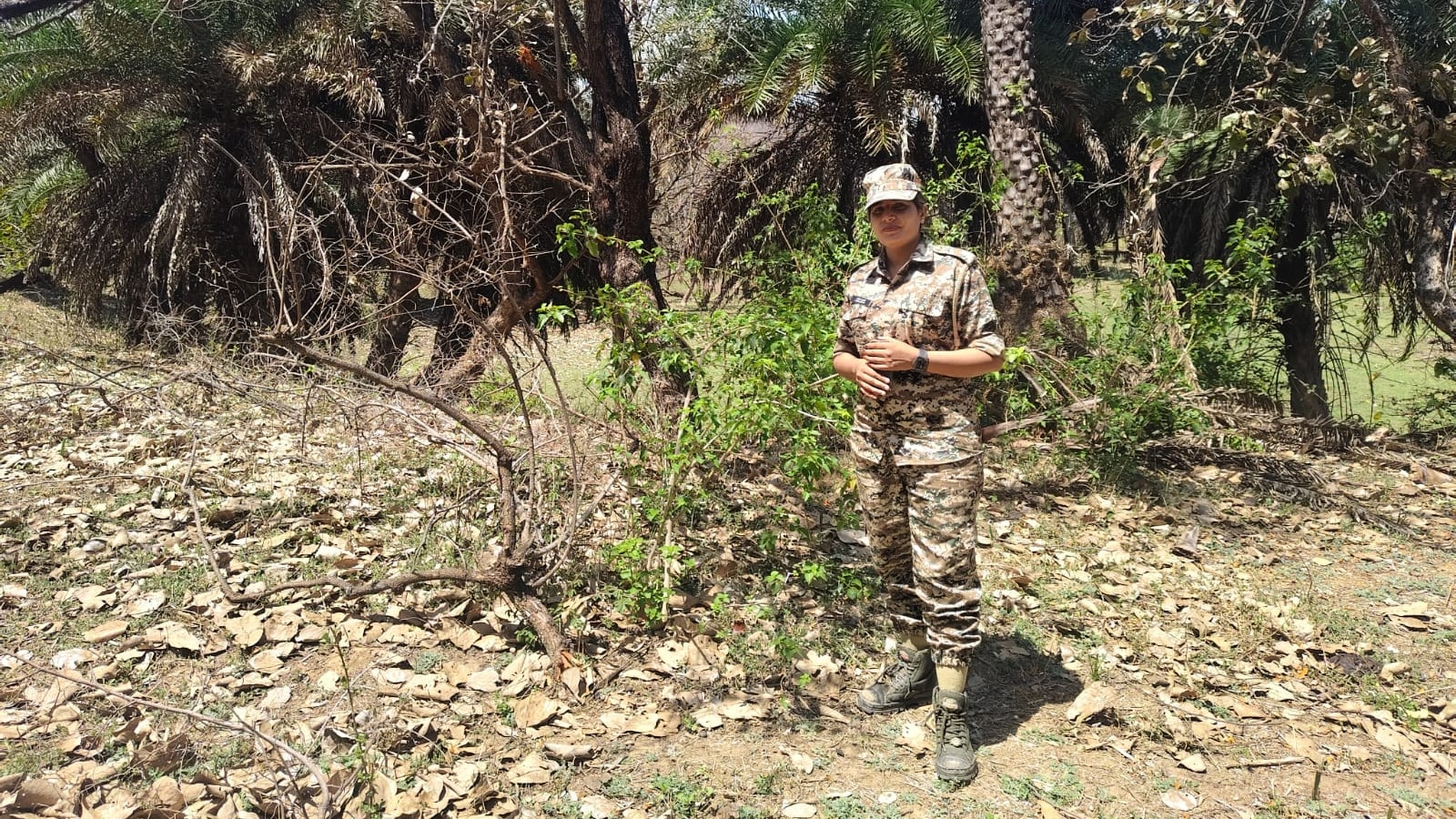
The accolades sit lightly on Anita Chaudhary – till she hops onto the back of a motorcycle for a round of the Shergarh Sanctuary in Baran, spread across 9,880 hectares or 99 sq km, of which a little less than one-third (2,949 hectares) is under her supervision.
Since 2021, when she was first deployed to the sanctuary, which boasts of leopards, sloth bear, hyenas, wild boars, chinkaras and sambar deer, the 30-year-old is credited with helping rescue around 500 animals, including crocodiles, and cracking down on smugglers and illegal miners.
The WWF’s ‘Machchli National Award’, named after the famous Ranthambhore tigress and including a cash component of Rs 50,000, was the fourth recognition of her work.
These days the Shergarh jungle is dry, with trees shedding leaves and sun beating down over vast stretches of rugged, rocky land. Baran falls somewhere between Rajasthan’s dry regions and the forested areas across the border in Madhya Pradesh.
“When I first came here, the forest used to be crawling with people, who would come to graze animals or to hunt wild boars or for wood. This was disturbing the wildlife,” says Chaudhary.
She decided to tighten this as the first step. It was difficult to make people take her seriously till she got an FIR registered against a man who had killed a wild boar – the first such over a wild boar in the sanctuary.
Since then, more than 50 FIRs have been filed under Chaudhary against poachers, and multiple fines imposed on tendu patta smugglers, animal herders and illegal stone miners.
Divisional Forest Officer (DFO) Anurag Bhatnagar says: “Chaudhary went ahead with filing FIRs, made check dams, did boring for water, and created small ponds so that wild animals would not venture far.”
The efforts have ensured that many animals believed to have disappeared in the area are being spotted again; sloth bear droppings were found only last year, the DFO says. Chaudhary knows almost the exact number of bee hives or termite hills inside, he adds, talking about how closely she understands the forest.
Forest guards earlier conducted patrols in the morning and evening; she sticks to no fixed schedules, and often goes on rounds at night, sometimes at 2 am. The patrolling is done on motorcycles, and while she can ride one, she usually goes along with a forest staff.
Inside the sanctuary, Chaudhary lives in a two-room “anti-poaching” chowki – known as ‘Naka Kishanpura Masaaldaran’ – which she shares with a junior, Pooja Sharma, 25. Solar power helps run the appliances, including a washing machine, and Chaudhary and Sharma do the cooking and cleaning themselves.
Sharma calls Chaudhary an excellent mentor. “Anita didi has taken me to every corner of the sanctuary. She has also introduced me to researchers who have taught me about the local species,” she says.
Forest guards undergo three-month training at the CRPF camp in Ajmer, which includes physical training and learning about the job. But, Chaudhary says, what they learn about the forest is on the job.
Talking about her own early days, she says: “I didn’t know about the animals and plants here as in my native Jhunjhunu there are no forests. I learnt from seniors and from villagers nearby. These are ways to understand the forest.”
Including that no two seasons are the same. If in summers they have to guard against tendu patta smugglers, monsoon means poachers are on the prowl. “They know it is difficult for us to reach a spot quickly as there are no roads and paths are slippery. Animals also emerge from their hideouts due to rain and become easier targets,” Chaudhary says.
Poachers and illegal miners have powerful backing, which can also be tricky. “Even local politicians may intervene. I have been threatened with transfers, that I would be killed, and offered lakhs as bribe. But I have always refused to budge,” Chaudhary says.
DFO Bhatnagar says he frequently gets “complaints” about Chaudhary’s “strictness”. The support of seniors like him is crucial, she says. “Not once have they stopped me acting against anyone.”
Shergarh Sanctuary is a long distance from home for Chaudhary, who belongs to Amarpura village in Jhunjhunu, more than 300 km away. She got a job as a forest guard when just 20, with her first assignment at Mukam Badora Range Office in Kota, 400 km away.
Her father Raghuveer Singh, a retired Army subedar, encouraged her to take the job, against his wife Indira Devi’s protests. Anita is the third of four siblings. “In the Army, I had seen women posted on the border, earning accolades… Seeing Anita working so hard to protect the forest area fills me with joy,” he tells The Indian Express.
When Chaudhary started, women were deployed for only office work. “But I used to visit field areas with other officials and, in 2021, when I was posted at Naka Badora in Shergarh Sanctuary, I requested DFO Anurag to give me work such as patrolling. In 2025, I was given this chowki,” Chaudhary says.
Her husband Vinay and in-laws have been as supportive, says Chaudhary, who has been married four years.
Vinay, who works at a cement factory in Jhunjhunu, says she visits Anita as often as he can. “My work is administrative, which can be done online as well,” he says, adding: “She has taught me a lot about the forest and the laws of this country: It is interesting to be with a smart woman.”
Chaudhary, who earns about Rs 45,000 a month, says they have been talking of having a child. Her parents have promised to help out, but she doesn’t expect it to be easy.
Tying her straightened hair in a pony with a quick flick of her wrist, the paint on her nails flashing, Chaudhary points to the few beauty products on the narrow dressing table in her chowki room and smiles: “None of this works in the summers… Patrolling inside the forest, our face becomes unrecognizable.”
The distance at these times helps, she laughs. “A weekend with the husband and a long vacation is my definition of a happy wedding.”
Stay updated with the latest - Click here to follow us on Instagram
Ten years as a forest guard, hundreds of animals “rescued”, illegal tendu patta trade and mining checked, and a national award by the World Wildlife Fund for Nature.
The accolades sit lightly on Anita Chaudhary – till she hops onto the back of a motorcycle for a round of the Shergarh Sanctuary in Baran, spread across 9,880 hectares or 99 sq km, of which a little less than one-third (2,949 hectares) is under her supervision.
Since 2021, when she was first deployed to the sanctuary, which boasts of leopards, sloth bear, hyenas, wild boars, chinkaras and sambar deer, the 30-year-old is credited with helping rescue around 500 animals, including crocodiles, and cracking down on smugglers and illegal miners.
The WWF’s ‘Machchli National Award’, named after the famous Ranthambhore tigress and including a cash component of Rs 50,000, was the fourth recognition of her work.
These days the Shergarh jungle is dry, with trees shedding leaves and sun beating down over vast stretches of rugged, rocky land. Baran falls somewhere between Rajasthan’s dry regions and the forested areas across the border in Madhya Pradesh.
“When I first came here, the forest used to be crawling with people, who would come to graze animals or to hunt wild boars or for wood. This was disturbing the wildlife,” says Chaudhary.
She decided to tighten this as the first step. It was difficult to make people take her seriously till she got an FIR registered against a man who had killed a wild boar – the first such over a wild boar in the sanctuary.
Since then, more than 50 FIRs have been filed under Chaudhary against poachers, and multiple fines imposed on tendu patta smugglers, animal herders and illegal stone miners.
Divisional Forest Officer (DFO) Anurag Bhatnagar says: “Chaudhary went ahead with filing FIRs, made check dams, did boring for water, and created small ponds so that wild animals would not venture far.”
The efforts have ensured that many animals believed to have disappeared in the area are being spotted again; sloth bear droppings were found only last year, the DFO says. Chaudhary knows almost the exact number of bee hives or termite hills inside, he adds, talking about how closely she understands the forest.
Forest guards earlier conducted patrols in the morning and evening; she sticks to no fixed schedules, and often goes on rounds at night, sometimes at 2 am. The patrolling is done on motorcycles, and while she can ride one, she usually goes along with a forest staff.
Inside the sanctuary, Chaudhary lives in a two-room “anti-poaching” chowki – known as ‘Naka Kishanpura Masaaldaran’ – which she shares with a junior, Pooja Sharma, 25. Solar power helps run the appliances, including a washing machine, and Chaudhary and Sharma do the cooking and cleaning themselves.
Sharma calls Chaudhary an excellent mentor. “Anita didi has taken me to every corner of the sanctuary. She has also introduced me to researchers who have taught me about the local species,” she says.
Forest guards undergo three-month training at the CRPF camp in Ajmer, which includes physical training and learning about the job. But, Chaudhary says, what they learn about the forest is on the job.
Talking about her own early days, she says: “I didn’t know about the animals and plants here as in my native Jhunjhunu there are no forests. I learnt from seniors and from villagers nearby. These are ways to understand the forest.”
Including that no two seasons are the same. If in summers they have to guard against tendu patta smugglers, monsoon means poachers are on the prowl. “They know it is difficult for us to reach a spot quickly as there are no roads and paths are slippery. Animals also emerge from their hideouts due to rain and become easier targets,” Chaudhary says.
Poachers and illegal miners have powerful backing, which can also be tricky. “Even local politicians may intervene. I have been threatened with transfers, that I would be killed, and offered lakhs as bribe. But I have always refused to budge,” Chaudhary says.
DFO Bhatnagar says he frequently gets “complaints” about Chaudhary’s “strictness”. The support of seniors like him is crucial, she says. “Not once have they stopped me acting against anyone.”
Shergarh Sanctuary is a long distance from home for Chaudhary, who belongs to Amarpura village in Jhunjhunu, more than 300 km away. She got a job as a forest guard when just 20, with her first assignment at Mukam Badora Range Office in Kota, 400 km away.
Her father Raghuveer Singh, a retired Army subedar, encouraged her to take the job, against his wife Indira Devi’s protests. Anita is the third of four siblings. “In the Army, I had seen women posted on the border, earning accolades… Seeing Anita working so hard to protect the forest area fills me with joy,” he tells The Indian Express.
When Chaudhary started, women were deployed for only office work. “But I used to visit field areas with other officials and, in 2021, when I was posted at Naka Badora in Shergarh Sanctuary, I requested DFO Anurag to give me work such as patrolling. In 2025, I was given this chowki,” Chaudhary says.
Her husband Vinay and in-laws have been as supportive, says Chaudhary, who has been married four years.
Vinay, who works at a cement factory in Jhunjhunu, says she visits Anita as often as he can. “My work is administrative, which can be done online as well,” he says, adding: “She has taught me a lot about the forest and the laws of this country: It is interesting to be with a smart woman.”
Chaudhary, who earns about Rs 45,000 a month, says they have been talking of having a child. Her parents have promised to help out, but she doesn’t expect it to be easy.
Tying her straightened hair in a pony with a quick flick of her wrist, the paint on her nails flashing, Chaudhary points to the few beauty products on the narrow dressing table in her chowki room and smiles: “None of this works in the summers… Patrolling inside the forest, our face becomes unrecognizable.”
The distance at these times helps, she laughs. “A weekend with the husband and a long vacation is my definition of a happy wedding.”