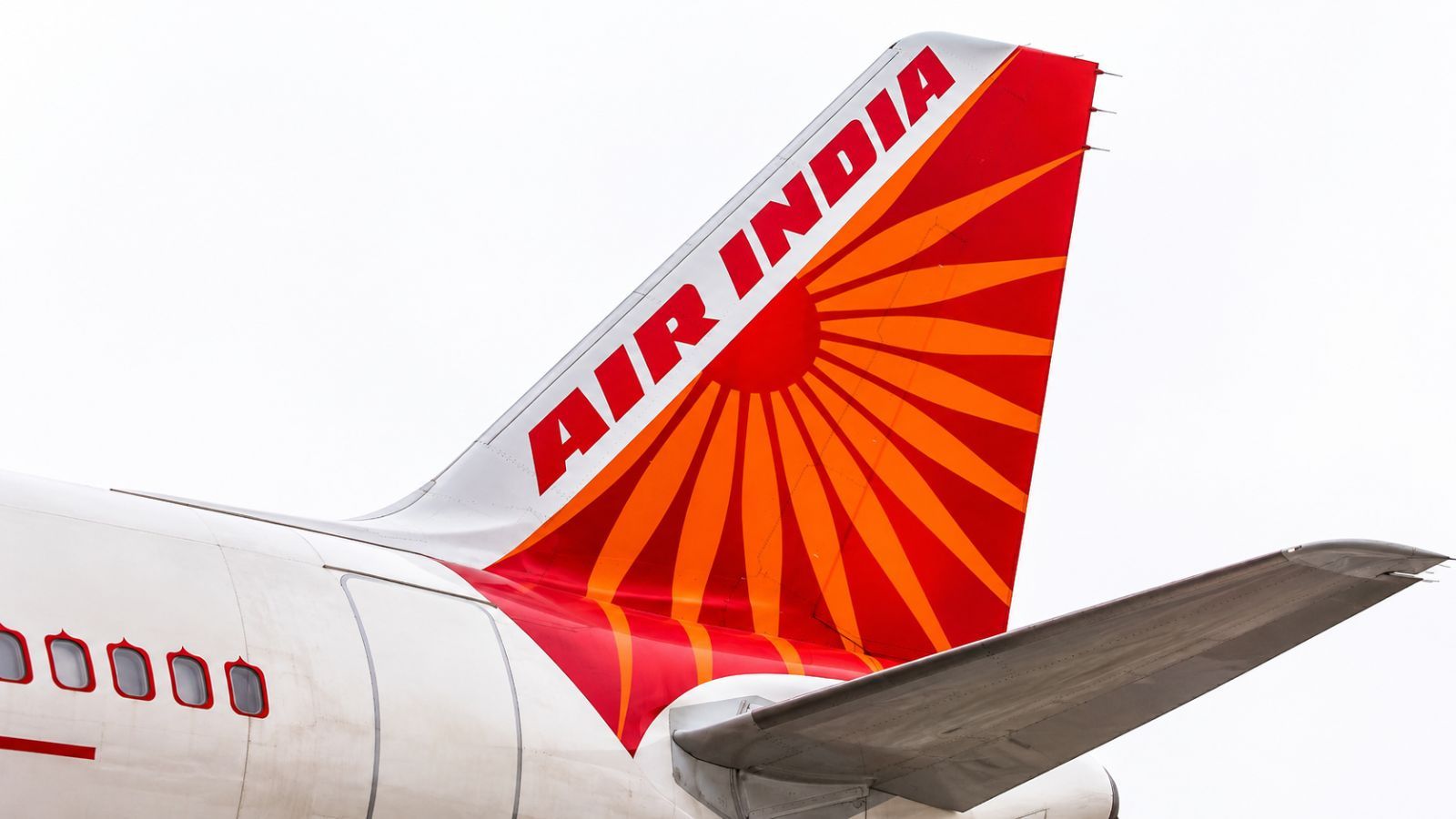


Air India flight suffers tail strike while landing in Bengaluru
Air India spokesperson said the matted would be investigated in accordance with established procedures and in coordination with the relevant regulatory authorities.
An Air India aircraft carrying 181 passengers suffered a tail strike while landing at Bengaluru airport, following which the plane was grounded for a detailed inspection.
The incident involved Air India flight AI2651, which was operating from Delhi to Bengaluru.
An Air India spokesperson told PTI that the flight landed safely and all passengers and crew were unharmed. According to reports, the flight was encountered with turbulence while approaching landing. Following the unstable approach, the pilot decided to execute a go-around maneuver. It was during this maneuver that the aircraft reportedly experienced the tail strike.
Following the incident, the aircraft was grounded for a detailed inspection. Air India spokesperson said the matted would be investigated in accordance with established procedures and in coordination with the relevant regulatory authorities. According to flight tracking website Flightradar24, the aircraft operating flight AI2651 was an Airbus 321. The airline spokesperson said the turbulence happened during approach was likely caused by wake turbulence from a wide-body aircraft that had taken off in the area.
Subsequently, the return flight AI2652 from Bengaluru to Delhi was cancelled. Air India said necessary arrangements were being made for affected passengers, with the Bengaluru ground team providing assistance.
The incident that reportedly led to the tail strike was said to be due to “wake turbulence”. Wake turbulence is the disturbed air left behind by an aircraft as it takes off. It is generated particularly during the lift where it take off and while trying to keeps itself in the air.
According to the Federal Aviation Administration (FAA), wake turbulence forms due to pressure differences around an aircraft’s wings, creating rotating air masses known as vortices.
The wake turbulence generated by one aircraft can affect another aircraft flying behind or nearby, depending on the strength, duration, and direction of these vortices, potentially impacting stability during critical flight phases such as approach or landing.
(With inputs from PTI)
Stay updated with the latest - Click here to follow us on Instagram
An Air India aircraft carrying 181 passengers suffered a tail strike while landing at Bengaluru airport, following which the plane was grounded for a detailed inspection.
The incident involved Air India flight AI2651, which was operating from Delhi to Bengaluru.
An Air India spokesperson told PTI that the flight landed safely and all passengers and crew were unharmed. According to reports, the flight was encountered with turbulence while approaching landing. Following the unstable approach, the pilot decided to execute a go-around maneuver. It was during this maneuver that the aircraft reportedly experienced the tail strike.
Following the incident, the aircraft was grounded for a detailed inspection. Air India spokesperson said the matted would be investigated in accordance with established procedures and in coordination with the relevant regulatory authorities. According to flight tracking website Flightradar24, the aircraft operating flight AI2651 was an Airbus 321. The airline spokesperson said the turbulence happened during approach was likely caused by wake turbulence from a wide-body aircraft that had taken off in the area.
Subsequently, the return flight AI2652 from Bengaluru to Delhi was cancelled. Air India said necessary arrangements were being made for affected passengers, with the Bengaluru ground team providing assistance.
The incident that reportedly led to the tail strike was said to be due to “wake turbulence”. Wake turbulence is the disturbed air left behind by an aircraft as it takes off. It is generated particularly during the lift where it take off and while trying to keeps itself in the air.
According to the Federal Aviation Administration (FAA), wake turbulence forms due to pressure differences around an aircraft’s wings, creating rotating air masses known as vortices.
The wake turbulence generated by one aircraft can affect another aircraft flying behind or nearby, depending on the strength, duration, and direction of these vortices, potentially impacting stability during critical flight phases such as approach or landing.
(With inputs from PTI)