

US trade deal close, final path emerging: Piyush Goyal after new US tariff architecture
Speaking at the Debt Capital Market Summit, Goyal said that India’s exports in October touched an all time high of $90 billion and total exports touched $90 billion in a single month at a time when many of India’s substantive free trade agreements (FTAs) have not come into effect.
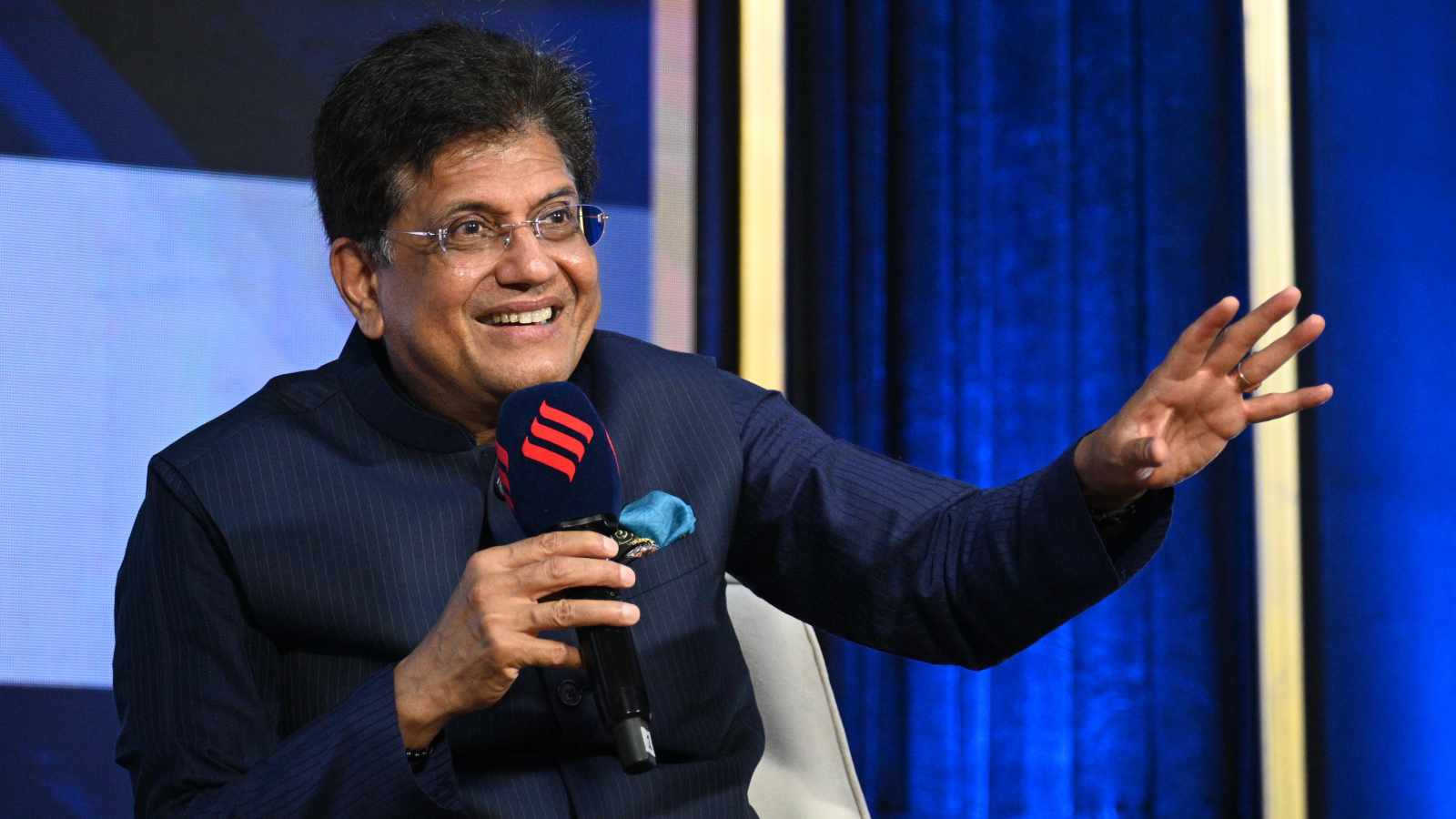
A day after the US released its new tariffs architecture after concluding two Section 301 tariff investigation on India and 15 other countries, Commerce Minister Piyush Goyal on Friday said that the pathway to the US trade deal is now taking “some shape” and “close to culmination”.
Speaking at the Debt Capital Market Summit, Goyal said that India’s exports in October touched an all time high of $90 billion and total exports touched $90 billion in a single month at a time when many of India’s substantive free trade agreements (FTAs) have not come into effect.
“The EU FTA will be hopefully executed and signed later this year and come into effect in March next year. The US trade deal is close to culmination. The process and pathway which was always something which held back the finalising the deal is now taking some shape,” he said.
This comes as the US seems to have agreed to a key Indian demand of getting a comparative advantage over its rivals. Under the new tariffs architecture, India has received a marginally better tariff rate offer of 17% post US deal compared to 18% to 20% rate offered to the rest of the Association of Southeast Asian Nations (ASEAN) countries such as Malaysia, Thailand, Indonesia and Vietnam.
To be sure, the US also has fresh leverage on India after US President Dondla Trump signed into law the Lindsey O. Graham Sanctioning Russia and Iran Act of 2026 earlier this year, giving him the authority to impose tariffs up to 100% on countries, including India and China, that continue buying Russian oil and gas. The use of the act had been paused for 60 days ahead of the mid-term elections on November 3.
The Ministry of External Affairs had said that India remains committed to ensuring the nation’s energy security “through diversified sourcing and based on evolving market dynamics”. It has said that the proposed legislation’s implications for the India-US relationship as well as the global energy market have been flagged in discussions with US representatives.
While India stands to gain a tariff advantage over its ASEAN peers, New Delhi will have to accept steep demands under the trade deal. Exporters said that the government will now have to take a call on what kind of concessions they will agree for a 8% tariffs difference. A no deal rate for India is set at 25%.
According to the joint statement released by the two countries in February, India agreed to “eliminate or reduce” tariffs on all US industrial goods and a wide range of US food and agricultural products, including dried distillers’ grains (DDGs), red sorghum for animal feed, tree nuts, fresh and processed fruit, soybean oil, wine and spirits, and additional products. However, India did not formally sign the trade deal.
“India agrees to address long-standing barriers to the trade in US medical devices; eliminate restrictive import licensing procedures that delay market access for, or impose quantitative restrictions on, US Information and Communication Technology (ICT) goods; and determine, with a view towards a positive outcome, within six months of entry into force of the Agreement whether US-developed or international standards, including testing requirements, are acceptable for US exports entering the Indian market in identified sectors,” the joint statement stated.
It also said India intends to purchase $500 billion worth of US energy products, aircraft and aircraft parts, precious metals, technology products, and coking coal over the next 5 years. “India and the United States will significantly increase trade in technology products, including Graphics Processing Units (GPUs) and other goods used in data centres, and expand joint technology cooperation,” the statement said.