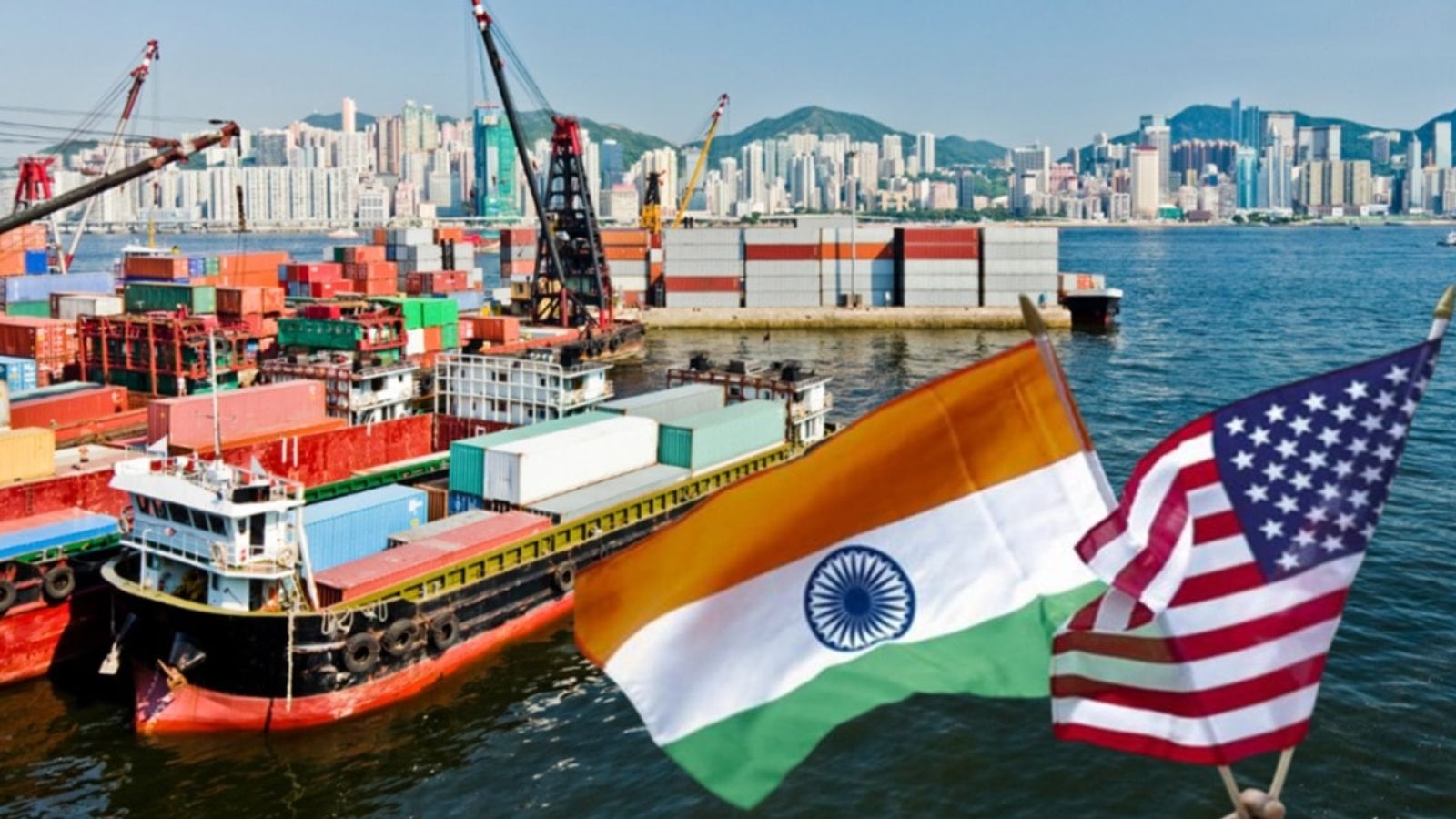


25% US tariffs: Commerce Ministry bats for resolution within trade deal framework
The ministry said that the government remains committed to working closely with the United States towards the early conclusion of the India-US Bilateral Trade Agreement.
Hours after the United States Trade Representative (USTR) proposed 25% tariffs on India after concluding two Section 301 tariff investigations on Wednesday, the Commerce and Industry Ministry said that India does not have overcapacity in any sector and that trade-related concerns should be addressed within the framework of the ongoing trade negotiations.
“India and the United States are engaged in negotiations for a Bilateral Trade Agreement. It has been India’s position that any trade-related concerns should be addressed within the framework of these negotiations,” the ministry said in a statement.
The ministry said that the government remains committed to working closely with the United States towards the early conclusion of the India-US Bilateral Trade Agreement.
“Government of India has taken note of the Notice of Determination and Request for Comments issued by the USTR in the Section 301 Investigation concerning Acts, Policies, and Practices of 14 economies, including India, relating to Structural Excess Capacity and Production in Manufacturing Sectors. The Notice is currently under examination,” the ministry said.
India engaged constructively throughout this investigation, the ministry said, adding that in response to the Notice of Initiation and in subsequent proceedings, the Department of Commerce stated that India does not have structural excess capacity in any sector.
The US had launched two Section 301 investigations. Under-utilised industrial production capacity sustained by government interventions or policies that incentivise companies to maintain or expand unused capacity inefficiently is termed “structural excess capacity” letting USTR impose a tariff rate on such imports.
The US had already proposed a 10% tariff on “forced labour”, meaning on imports of goods from India which used inputs produced via forced labour. Forced labour itself is defined as work or service exacted from a person under the threat of any penalty for non-performance and for which the worker does not offer themselves voluntarily.
In its findings following the excess capacity investigation, USTR said that India engages in a range of acts, policies, and practices that create, maintain, or contribute to structural excess capacity and production by promoting production and exports, and failing to effectively address global structural excess capacity and production.
“India engages in acts, policies, and practices that promote structural excess capacity and production, including (1) implementing industrial plans to maintain and expand Indian manufacturing, setting overall targets for manufacturing and exports, such as Make in India, Production Linked Incentives (PLI), Atmanirbhar Bharat (Self-Reliant India), and the India Brand Equity Foundation (IBEF), including by offering financial incentives to eligible companies based on their incremental sales..,” USTR said.
India’s manufacturing sector as a share of GDP has, over the past five years, hovered between 13.1% and 14.4%, recording an average of 13.5% during this time, the report said.
“The manufacturing sector is of significant importance to India, accounting for 12.0% of employment in 2024. The relative size of India’s manufacturing sector to its GDP is larger than that of the United States, which was between 9% and 10% from 2020–2025, while the size of India’s manufacturing sector is higher than the OECD average, which was 13% in 2021,” USTR said.
USTR said that India’s current account balances have fluctuated over the past five years but India’s bilateral goods trade surplus with the United States has expanded almost continuously over the same period.
“In 2025, India had an overall global trade deficit of approximately $309 billion, growing from $241 billion in 2023 and $266 billion in 2022. However, India has had a persistent-and growing-trade surplus with the United States: $42.5 billion in 2023, $45.2 billion in 2024, and $57.3 billion in 2025,” USTR said in its findings.