

India’s push for construction equipment like TBMs should not become an ‘anti-China drive’: Report
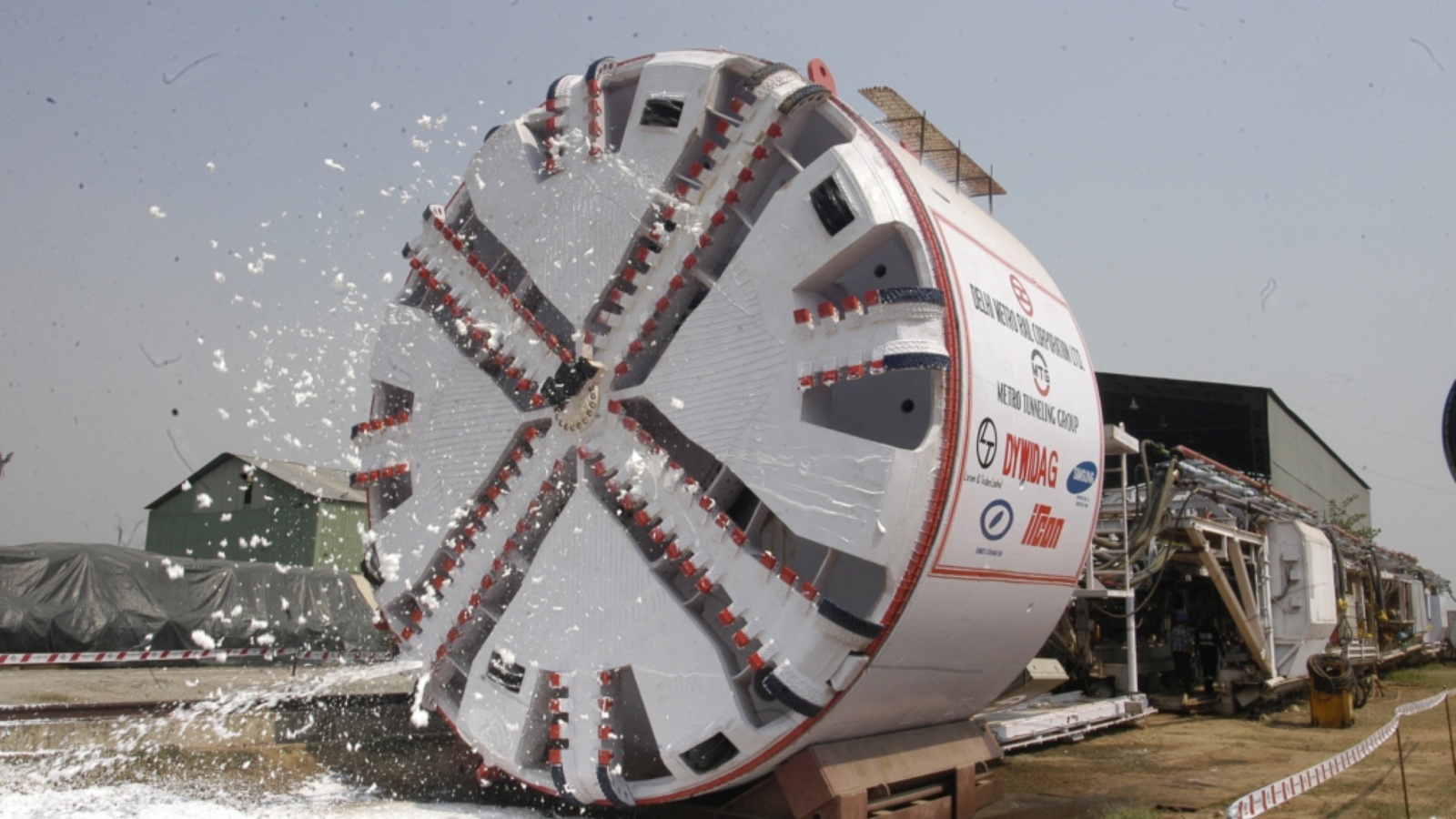
The Union Cabinet Wednesday had approved a Rs 11,000 crore scheme to boost domestic manufacturing of infrastructure equipment like tunnel boring machines (TBMs), ship-to-shore cranes, hydraulic excavators amid China’s restrictions on export of critical machinery.
A day after the Union Cabinet approved a major scheme to boost domestic manufacturing of high-value, technologically advanced construction equipment, including tunnel boring machines (TBMs), Global Times, the mouthpiece of the Chinese Communist Party, said that India’s localization drive should not be driven by an anti-China narrative. It said that self-reliance does not mean self-isolation, and localization should not become synonymous with protectionism.
The Cabinet’s decision on Wednesday to approve an Rs 11,000-crore scheme came about a month after China’s commerce ministry announced restrictions on the export of critical equipment, including TBMs, one of the most important machines for tunnel construction.
While China has been abruptly imposing export restrictions on other items as well like rare earth magnets and weaponizing the supply chain, the Chinese daily argued that India’s desire to build a domestic construction equipment industry is in line with its rapid industrialisation and urbanisation, and the scheme should not be construed as a “de-China” thing.
“India’s development of its construction equipment industry has its own economic logic, and there is no need to link a normal process of industrialization to a “de-China” or an “anti-China” narrative. According to some media reports, approval of the plan followed nearly two years of discussions between the construction equipment industry and the government on financial incentives to boost domestic manufacturing. This shows that the industry’s underlying economic rationale long predates recent supply concerns,” said Global Times in its editorial on Thursday.
India is currently the world’s third-largest market for construction and infrastructure equipment (CIE), after China and the United States, with a market size of around Rs 97,500 crore in 2024-25. However, imports still account for nearly 45% of domestic demand.
On the back of increased infrastructure spending, particularly in the roads, railways, ports and housing sectors, the government expects the domestic market to more than double to Rs 2.28 lakh crore by 2029-30.
“This vast market demand provides a practical foundation for nurturing indigenous manufacturing capacity. China has no reason to see India’s industrial progress as a threat. What truly warrants caution is that some Indian manufacturers are trying to secure more market space for local production by imposing tariffs and tightening local sourcing requirements,” said Global Times.
Citing China’s experience in the 1980s, when its technological foundations were weak and it relied on imported core components, the Chinese newspaper advocated international cooperation and an open market to strengthen India’s research and development capabilities.
“High-end construction equipment is technology, capital, and supply chain intensive. Its production involves precision machinery, hydraulic systems, core components, industrial controls and many other components. Erecting trade barriers, while India’s supporting industrial base is still immature, may drive up equipment procurement and production costs, potentially slowing the country’s ambitious infrastructure build-out. The concerns expressed by multinational manufacturers operating in India deserve to be taken seriously,” said Global Times.
It further said that, for instance, China’s leading construction company LiuGong introduced technology from US-based Caterpillar in 1987 and formed a joint venture with Germany’s ZF Friedrichshafen AG in 1995. It then steadily strengthened its R&D efforts and gradually built an industrial system covering complete machines, core components and services.
India relies heavily on imports for important construction equipment, which are used extensively in the construction of underground metro rail networks, railway tunnels and highways. This dependence has come under renewed scrutiny following Beijing’s decision to impose export controls on certain categories of construction equipment.
According to Geneva-based Global Trade Alert, India was both the largest initiator and the second most targeted jurisdiction for trade defence cases in the third quarter of 2026.
India initiated 18 anti-dumping and anti-subsidy investigations between July 1 and September 30, more than any other jurisdiction, according to Global Trade Alert data. It was also the second most-targeted jurisdiction during the period. Indian trade defence cases have largely targeted China.
India also faced delays in importing a tunnel boring machine from a German company Herrenknecht for its Mumbai-Ahmedabad bullet train project, as the machine was to be shipped from China.
However, the Chinese newspaper claimed that China’s mature construction equipment industrial chain is not an obstacle to India’s localization drive, but rather an important resource that can help India.
“The key lies in whether international technologies and industrial resources can be effectively combined with a country’s own R&D capabilities, market demand and engineering practice, so that external resources become endogenous drivers of development,” said the Chinese daily.