

Periods of extreme volatility don’t last forever: Sebi chief on market crash
Pandey asks retail investors not to react impulsively to short-term fluctuations; says markets have historically recovered after major global disruptions
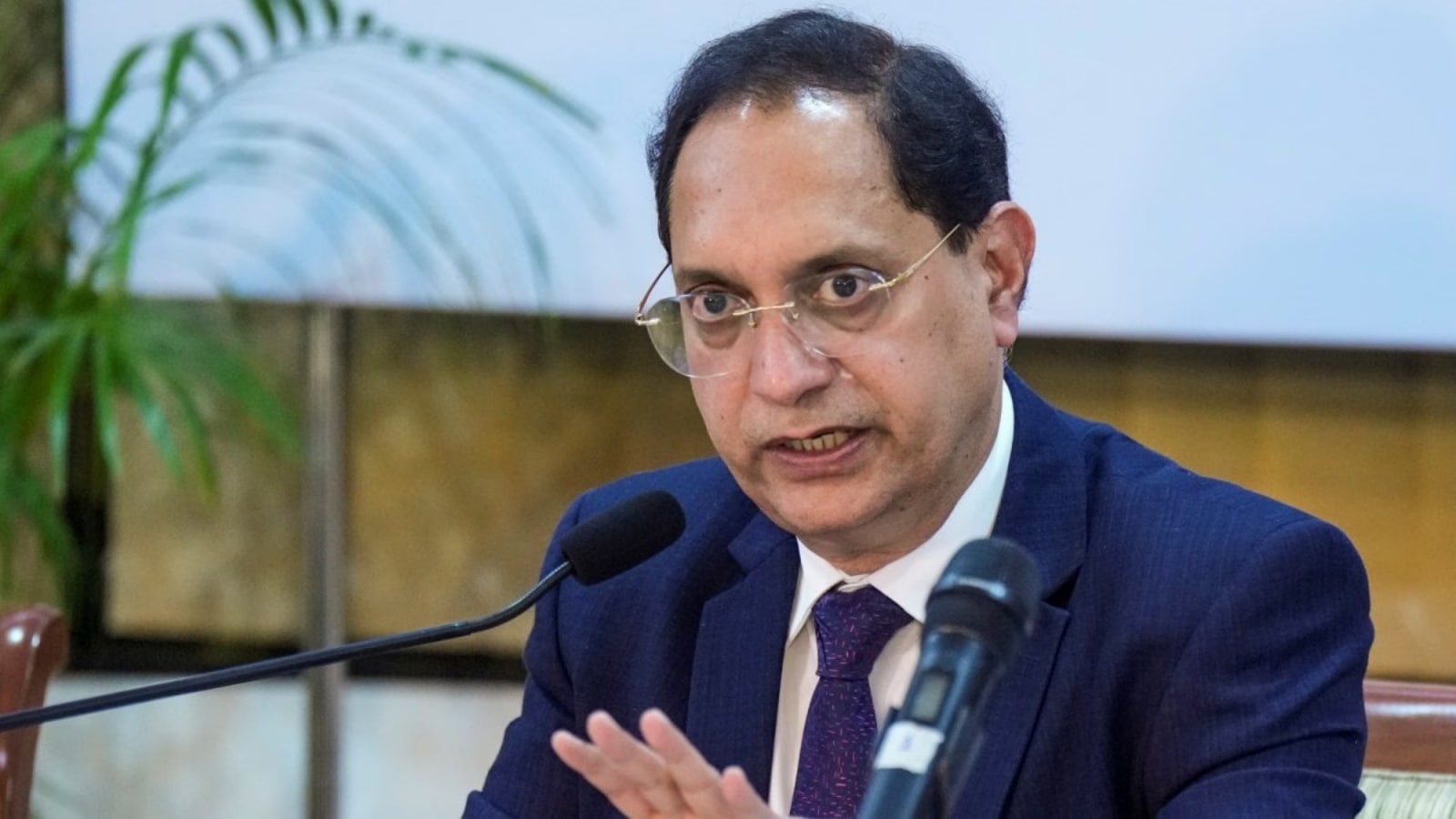
Calming frayed nerves in markets battered by the Middle East war, Securities and Exchange Board of India Chairman Tuhin Kanta Pandey on Saturday said “periods of extreme volatility don’t last forever” and urged retail investors not to react impulsively to short-term fluctuations as markets have historically recovered after major global disruptions.
Acknowledging the turbulence in the markets, Pandey said geopolitical tensions, technological disruption and energy shocks are all contributing to uncertainty. “Geopolitical tensions are shaping economic relationships. Conflict in the Middle East has massively disrupted energy supplies. Inevitably, capital markets have been severely impacted,” he said while speaking at the Moneycontrol Global Wealth Summit 2026 in Mumbai.
Pandey urged retail investors not to react impulsively to short-term fluctuations. “For retail investors, the best strategy would be to remain patient,” he said, noting that markets have historically recovered after major global disruptions.
Indian markets have fallen 9.3 per cent since the west asia war started on February 27, wiping out lakhs of crores of investors’ wealth. Crude oil prices have remained above or around the $100 per barrel mark over the last few days as supply has been disrupted due to the conflict in West Asia. The situation has caused a shortage of liquified natural gas across many parts of India and the potential impact of such exorbitant crude prices on corporate earnings have caused jitters in the market.
He said that volatility has become a defining feature of modern financial markets, particularly as the information environment has evolved and shocks spread quickly across economies. However, he stressed that such phases are not permanent: “One lesson becomes clear: periods of extreme volatility don’t last forever.”
India’s capital markets are deepening and becoming increasingly resilient, even as global headwinds create volatility, he said.
Pandey said Indian capital markets are expanding in scale, diversity and strength. “They are deepening, diversified and becoming increasingly resilient. But as markets grow in scale and complexity they also become more closely connected to global developments. And that brings us to the changing landscape in which today’s market operates,” he said.
Underlining the role of efficient markets, he said, “They enable transparent price discovery. They help absorb shocks without destabilising the broader financial system. And perhaps most importantly, they sustain investor confidence. Efficiency is the foundation of trust in the financial system. Without that, capital hesitates.”
Pandey highlighted the structural changes reshaping modern capital markets, pointing to economic fragmentation, shifting trade corridors and the growing role of technology. “Algorithmic trading, artificial intelligence and advanced data analytics are accelerating the speed at which markets operate,” he said.
He also flagged the velocity of information as a key risk. “News travels quickly, opinions travel even faster, and most importantly, markets today react almost instantly to the narratives. And therefore, the question before policymakers and market participants alike is: how do we ensure that speed does not compromise stability?” he said.
Pandey also said that liquidity conditions are becoming more episodic as global capital flows move quickly across geographies.
Sebi chief said capital markets will play an even more important role as India continues its economic journey. “The next phase of development will require deeper bond markets, stronger institutional participation and continued technological innovation,” he said.
He also highlighted steps taken by SEBI to protect investors, including monitoring misleading social media content and strengthening surveillance systems such as PaRRVA to detect potential market manipulation and misinformation.
Calming frayed nerves in markets battered by the Middle East war, Securities and Exchange Board of India Chairman Tuhin Kanta Pandey on Saturday said “periods of extreme volatility don’t last forever” and urged retail investors not to react impulsively to short-term fluctuations as markets have historically recovered after major global disruptions.
Acknowledging the turbulence in the markets, Pandey said geopolitical tensions, technological disruption and energy shocks are all contributing to uncertainty. “Geopolitical tensions are shaping economic relationships. Conflict in the Middle East has massively disrupted energy supplies. Inevitably, capital markets have been severely impacted,” he said while speaking at the Moneycontrol Global Wealth Summit 2026 in Mumbai.
Pandey urged retail investors not to react impulsively to short-term fluctuations. “For retail investors, the best strategy would be to remain patient,” he said, noting that markets have historically recovered after major global disruptions.
Indian markets have fallen 9.3 per cent since the west asia war started on February 27, wiping out lakhs of crores of investors’ wealth. Crude oil prices have remained above or around the $100 per barrel mark over the last few days as supply has been disrupted due to the conflict in West Asia. The situation has caused a shortage of liquified natural gas across many parts of India and the potential impact of such exorbitant crude prices on corporate earnings have caused jitters in the market.
He said that volatility has become a defining feature of modern financial markets, particularly as the information environment has evolved and shocks spread quickly across economies. However, he stressed that such phases are not permanent: “One lesson becomes clear: periods of extreme volatility don’t last forever.”
India’s capital markets are deepening and becoming increasingly resilient, even as global headwinds create volatility, he said.
Pandey said Indian capital markets are expanding in scale, diversity and strength. “They are deepening, diversified and becoming increasingly resilient. But as markets grow in scale and complexity they also become more closely connected to global developments. And that brings us to the changing landscape in which today’s market operates,” he said.
Underlining the role of efficient markets, he said, “They enable transparent price discovery. They help absorb shocks without destabilising the broader financial system. And perhaps most importantly, they sustain investor confidence. Efficiency is the foundation of trust in the financial system. Without that, capital hesitates.”
Pandey highlighted the structural changes reshaping modern capital markets, pointing to economic fragmentation, shifting trade corridors and the growing role of technology. “Algorithmic trading, artificial intelligence and advanced data analytics are accelerating the speed at which markets operate,” he said.
He also flagged the velocity of information as a key risk. “News travels quickly, opinions travel even faster, and most importantly, markets today react almost instantly to the narratives. And therefore, the question before policymakers and market participants alike is: how do we ensure that speed does not compromise stability?” he said.
Pandey also said that liquidity conditions are becoming more episodic as global capital flows move quickly across geographies.
Sebi chief said capital markets will play an even more important role as India continues its economic journey. “The next phase of development will require deeper bond markets, stronger institutional participation and continued technological innovation,” he said.
He also highlighted steps taken by SEBI to protect investors, including monitoring misleading social media content and strengthening surveillance systems such as PaRRVA to detect potential market manipulation and misinformation.