

Government dials fund managers for gig workers’ safety net
“We are in the process of creating various schemes and engaging with several fund managers to ensure the schemes are operationalised,” Pednekar said.
The Central government is consulting fund managers to bring social security schemes for gig workers, a labour ministry official said on Friday, about a month after several parts of north India witnessed protests demanding a minimum wage while citing rapidly rising cost of living.
“A huge part of our workforce is now getting absorbed in the gig and platform economy, and the potential is immense. Today, around 1 crore workers are employed in this sector, and the potential is to reach around 2.5 crore workers by the end of the decade. The government is focusing more towards this sector,” Ashutosh AT Pednekar, Joint Secretary and Director General (Labour Welfare), said.
He said that the government is in the process of operationalising various social security schemes related to accident and maternity for platform workers.
“We are in the process of creating various schemes and engaging with several fund managers to ensure the schemes are operationalised,” Pednekar said.
He also said that the Code on Social Security rules under the new labour code has already been notified on May 8.
“We are in the process of operationalising the Code, based on the rules through various mechanisms like the National Social Security Board for gig and platform workers, which is being operationalised. The board will look at unorganised workers,” he said.
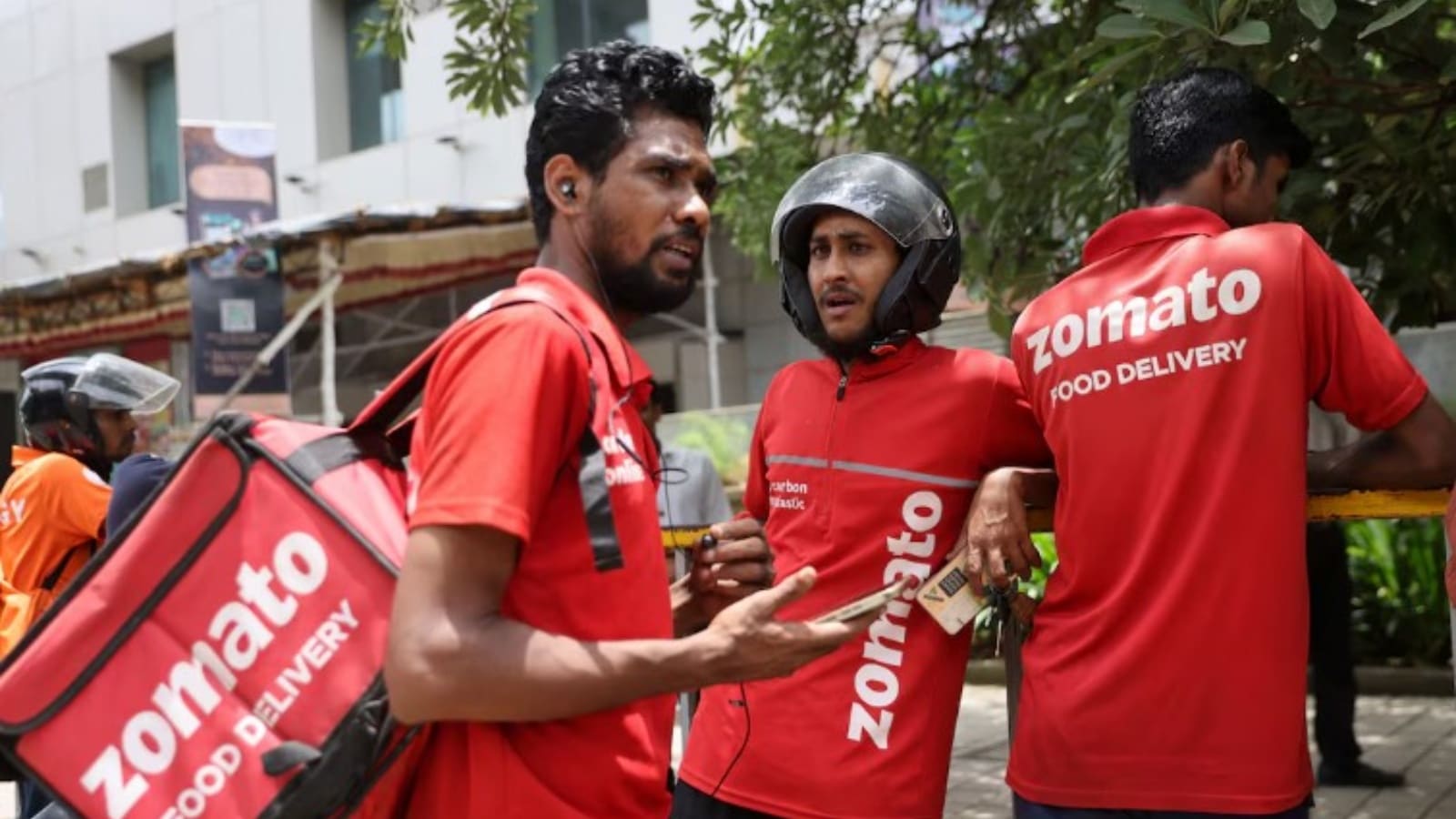
According to Eternal’s (Zomato and Blinkit’s parent company) Q3FY25 shareholder letter, average monthly earnings for delivery workers of Zomato and Blinkit who logged in at least eight hours a day and 26 days a month were Rs 27,726 in 2024, excluding fuel costs (which is a big expense for workers who drive hundreds of kilometres a day).
However, Eternal’s then-CEO Deepinder Goyal had said that in 2025, the average delivery worker on Zomato worked just 38 days in the year and 7 hours per working day.
Though he said that reflects the gig-style nature of the job, workers say that those types of average earnings are only possible when they do 10-14-hour shifts. Besides, much of the earnings are tied to incentives that companies offer workers for meeting certain targets on a given day.
In the case of platforms like Zomato and Swiggy, for instance, that means completing a set number of deliveries in a scheduled amount of time, without rejecting a single order.
One cancellation makes workers ineligible for any incentive, irrespective of the number of hours they put in. Platforms like Swiggy also deduct worker earnings for rejecting orders, this paper had earlier reported.
About the e-Shram portal, Pednekar said that it already has the database of aggregators and “we can understand, on a real-time basis, the benefits which the worker can or has availed”.
“Just like the UPI and Aadhaar changed the digital landscape in India, the e-Shram has the potential of changing the way the benefits are given to workers, along with the portability of benefits, which is a challenge worldwide, including India,” he said. Workers’ protests in Noida turned violent in April with clashes with police and torching of vehicles.
Since the start of this year, workers’ protests have been going on across industrial hubs, even before the energy crisis deepened after the closure of the Strait of Hormuz.
The Central government is consulting fund managers to bring social security schemes for gig workers, a labour ministry official said on Friday, about a month after several parts of north India witnessed protests demanding a minimum wage while citing rapidly rising cost of living.
“A huge part of our workforce is now getting absorbed in the gig and platform economy, and the potential is immense. Today, around 1 crore workers are employed in this sector, and the potential is to reach around 2.5 crore workers by the end of the decade. The government is focusing more towards this sector,” Ashutosh AT Pednekar, Joint Secretary and Director General (Labour Welfare), said.
He said that the government is in the process of operationalising various social security schemes related to accident and maternity for platform workers.
“We are in the process of creating various schemes and engaging with several fund managers to ensure the schemes are operationalised,” Pednekar said.
He also said that the Code on Social Security rules under the new labour code has already been notified on May 8.
“We are in the process of operationalising the Code, based on the rules through various mechanisms like the National Social Security Board for gig and platform workers, which is being operationalised. The board will look at unorganised workers,” he said.
According to Eternal’s (Zomato and Blinkit’s parent company) Q3FY25 shareholder letter, average monthly earnings for delivery workers of Zomato and Blinkit who logged in at least eight hours a day and 26 days a month were Rs 27,726 in 2024, excluding fuel costs (which is a big expense for workers who drive hundreds of kilometres a day).
However, Eternal’s then-CEO Deepinder Goyal had said that in 2025, the average delivery worker on Zomato worked just 38 days in the year and 7 hours per working day.
Though he said that reflects the gig-style nature of the job, workers say that those types of average earnings are only possible when they do 10-14-hour shifts. Besides, much of the earnings are tied to incentives that companies offer workers for meeting certain targets on a given day.
In the case of platforms like Zomato and Swiggy, for instance, that means completing a set number of deliveries in a scheduled amount of time, without rejecting a single order.
One cancellation makes workers ineligible for any incentive, irrespective of the number of hours they put in. Platforms like Swiggy also deduct worker earnings for rejecting orders, this paper had earlier reported.
About the e-Shram portal, Pednekar said that it already has the database of aggregators and “we can understand, on a real-time basis, the benefits which the worker can or has availed”.
“Just like the UPI and Aadhaar changed the digital landscape in India, the e-Shram has the potential of changing the way the benefits are given to workers, along with the portability of benefits, which is a challenge worldwide, including India,” he said. Workers’ protests in Noida turned violent in April with clashes with police and torching of vehicles.
Since the start of this year, workers’ protests have been going on across industrial hubs, even before the energy crisis deepened after the closure of the Strait of Hormuz.