

Food prices rise in May, propel household inflation to 3.93%
Retail prices are seen rising at a faster rate in the coming months as producers pass on more of their input price increases on account of the war in West Asia, with a sub-par monsoon seen as another upside risk.
Consumer prices in India rose 3.93% in May compared to a year ago as producers continued to pass on more of their input cost increases to households, according to data released on Friday by the Ministry of Statistics and Programme Implementation (MoSPI). Higher food prices also drove up the overall inflation rate, with the Consumer Food Price Index rising 0.92% month-on-month in May as against a 0.75% increase in the overall CPI.
At 3.93%, the May headline inflation rate, as measured by the Consumer Price Index (CPI), is higher than the 3.48% recorded in April. Inflation, which is the year-on-year change in prices, has now risen every month in 2026. And economists expect it to rise again in June to around 4.5%.
“Geopolitical tensions and El Nino conditions continue to remain upside risks to inflation,” said Megha Arora, Director at India Ratings & Research. While crude oil prices have declined on reports of the US and Iran reaching an agreement over the opening of the Strait of Hormuz, “it will take time for crude prices to move towards $70/bbl”, a level seen before the West Asia war.
After having risen to 4.2% in April from 2.9% in March, inflation for the ‘restaurant and accommodation services’ category increased further to 5.75% in May, reflecting the impact of eateries raising menu prices due to hikes in commercial LPG prices on account of the West Asia war. The increase in prices of ‘restaurant and accommodation services’ in May compared to April was 1.8%.
Meanwhile, overall food inflation rose to 4.78% from 4.2% in April, with Radhika Rao, Senior Economist at DBS Bank, reasoning that “heatwave conditions in some parts of the country” helped push up food prices.
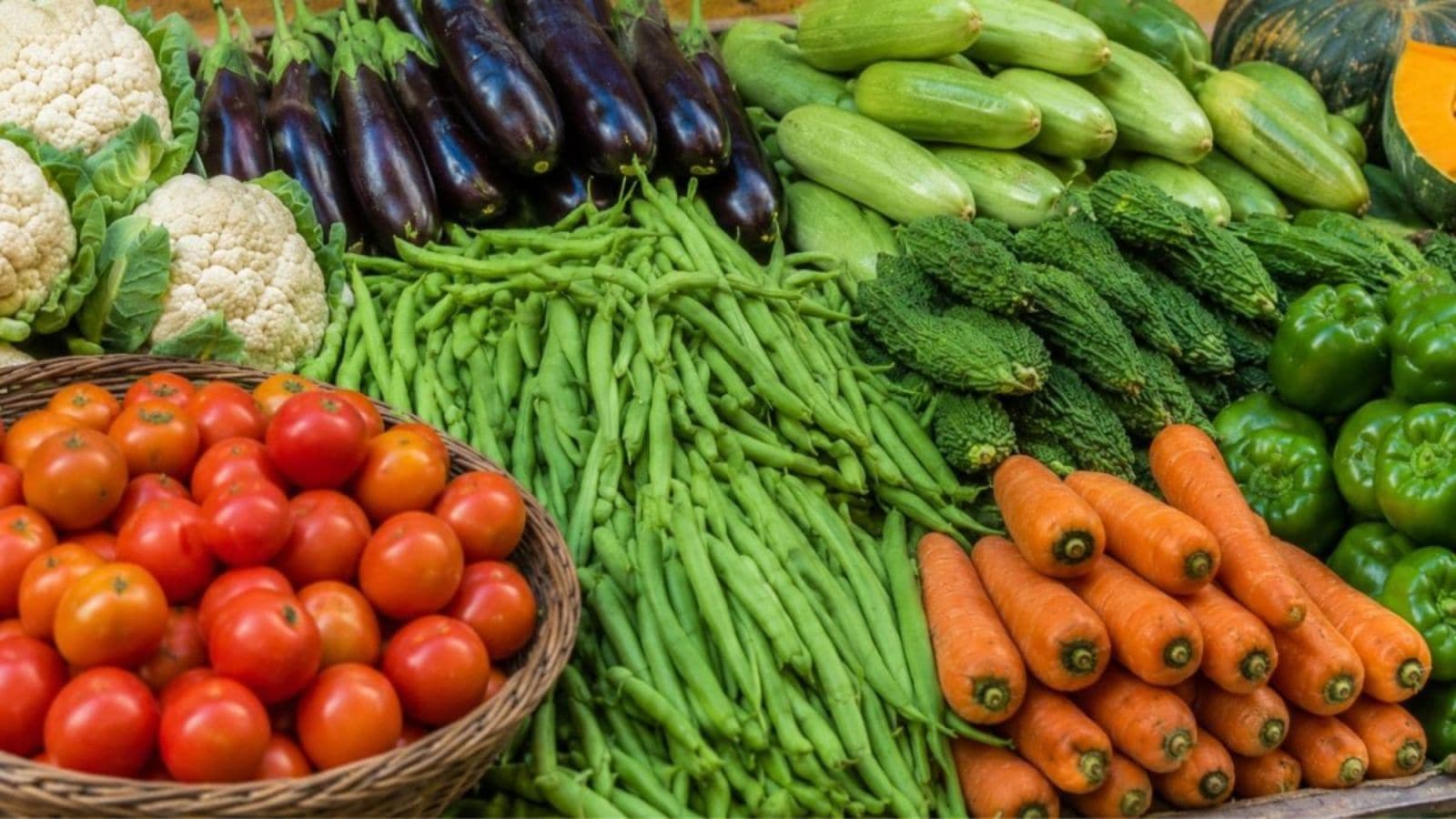
According to Rajeev Sharan, Head of Research at Brickwork Ratings, while the May inflation print is broadly in line with expectations, the rise in food inflation “underscores persistent price pressures in perishables, particularly tomatoes, ginger and other vegetables”.
Tomato prices were 48% higher year-on-year in May, while ginger was up 32%. The corresponding figures for April were 35% and 14%, respectively.
The rise in food prices in May will be of concern to policymakers, with the monsoon this year forecast to be 10% weaker than the Long Period Average.
“Rising input costs for producers – reflected in the Wholesale Price Index inflation of 8.3% in April – are now increasingly feeding into consumer prices. The impact of the West Asia conflict, which has now entered its fourth month in June, is therefore starting to percolate household budgets,” said Dipti Deshpande, Principal Economist at Crisil.
The increase in CPI inflation comes a week after the Reserve Bank of India’s (RBI) Monetary Policy Committee (MPC) left the policy repo rate unchanged at 5.25%, with the central bank lowering its growth forecast and raising its inflation view for 2026-27.
On June 5, the RBI cut its GDP growth forecast for 2026-27 to 6.6% from 6.9% and raised the inflation projection to 5.1% from 4.6%, with Governor Sanjay Malhotra warning there are indications that average crude oil prices this fiscal would be “substantially higher” than the $85 per barrel.
As per the RBI’s latest forecasts, inflation is seen averaging 4.2% in April-June, 5.1% in July-September, 5.9% in October-December, and 5.4% in January-March 2027. Over April-May, CPI inflation has averaged 3.7%.
The RBI is mandated to target a CPI inflation of 4% in the medium-term in a range of 2-6%. As such, the forecasts show inflation reaching the upper bound of the RBI’s target range in the last three months of 2026.
“Our assessment is that headline retail inflation could breach 6% at some point over the next six months,” said Sujan Hajra, Chief Economist at Anand Rathi Group. “Even so, the RBI may refrain from adopting a decisively hawkish stance, provided core inflation remains anchored around 4% and inflationary pressures do not become broad-based.”
The RBI expects core inflation to average 4.7% in 2026-27. In May, core inflation rose to 3.9% after having stayed steady at 3.7% in the first four months of 2026.
Core inflation measures the change in prices of non-food, non-fuel items, whose prices can be volatile. The movement in prices of non-food, non-fuel items, therefore, are seen as an indicator of underlying price pressures in the economy.
Economists warn that the second-round effects of fuel price hikes are expected to intensify across non-food items.
“Moreover, domestic LPG cylinder prices were raised by Rs 29/cylinder in early-June which is also likely to exert some pressure on the headline CPI print in the month,” said Rahul Agrawal, Principal Economist at ICRA.