LPG imports hit, Govt pushes kerosene, coal as options
Noting that bookings for LPG cylinders have shot up multifold due to misinformation and concern, the government also appealed to consumers to not fall prey to panic and avoid rush-booking of cylinders.
Amid growing concerns over liquefied petroleum gas (LPG) — cooking gas — supplies in the country, which have been hit due to the West Asia conflict, the government is activating other fuel options like kerosene, fuel oil, biomass and even coal to ease pressure on LPG for commercial users like restaurants and hotels.
The government has also decided to allocate for commercial use 20% of the average monthly commercial LPG requirement; this will be done in coordination with state governments. Moreover, as a demand management measure amid panic booking by household consumers, the minimum gap between cylinder bookings by households in rural and remote areas has been increased to 45 days, while for urban households, it continues to be 25 days. The minimum gap used to be 21 days earlier, but was increased to 25 days after the conflict started.
Noting that bookings for LPG cylinders have shot up multifold due to misinformation and concern, the government also appealed to consumers to not fall prey to panic and avoid rush-booking of cylinders.
“Alternate fuel options are being activated to ease pressure on LPG and gas channels. Kerosene is being made available through retail outlets and PDS channels, and fuel oil is being made available for industrial and commercial consumers. The MoEFCC (Ministry of Environment, Forest and Climate Change) has advised State Pollution Control Boards to permit, for the duration of this crisis period, the use of biomass, RDF (Refuse-derived fuel) pellets, and kerosene/ coal as alternate fuels for the hospitality and restaurant segment for one month, which would enable a wider range of establishments to switch and free up LPG for priority consumers,” Union Petroleum Minister Hardeep Singh Puri said in Lok Sabha.
In a briefing, Petroleum Ministry Joint Secretary Sujata Sharma said that in addition to the standard quarterly allocation of 1 lakh kilolitres, the government has released an additional 48,000 kilolitres of kerosene to state governments for distribution to identified beneficiaries. She said the Ministry of Coal has directed Coal India and Singareni Collieries Company to allot higher quantities of coal to states for use by small and medium consumers.
The effective halt in maritime traffic through the crucial chokepoint of the Strait of Hormuz has significantly impacted India’s LPG imports. The country depends on imports to meet around 60% of its LPG requirement, and 90% of the LPG imports come from West Asia through the Strait. This effectively means that roughly 55% of India’s LPG consumption volumes are currently unavailable.
Given the crisis, the government has invoked the Essential Commodities Act to prioritise LPG supplies to households over commercial and industrial consumers, ordered refiners to maximise LPG production, and directed them to divert propane, butane, and other streams from petrochemical production to LPG production. In the commercial segment, hospitals and educational institutions have been placed on uninterrupted priority supply; their access to LPG is fully assured regardless of broader demand conditions, the government said.
India has over 33 crore domestic LPG consumers. According to Sharma, measures to augment LPG supplies have already led to a 28% increase in domestic LPG output vis-à-vis the pre-conflict levels, and all of it is being diverted to meet household consumption demand.
“Commercial LPG has been regulated to prevent black marketing, not to penalise the hospitality sector. Commercial LPG is sold in a completely deregulated, over-the-counter market at market price, without any government subsidy. There is no registration system, no booking requirement, no digital authentication, and no delivery confirmation mechanism. Any business or individual can purchase cylinders in any quantity at the point of sale, with no government control in normal times. In a supply-constrained environment where public anxiety is elevated, this deregulated structure creates a direct and uncontrolled pathway for hoarding, diversion, and resale at inflated prices. Had commercial supply been left entirely unrestricted, cylinders purchased over the counter could have been diverted to the grey market at the expense of genuine commercial consumers and domestic households alike,” Puri told Parliament.
“The government has therefore taken the responsible course: to regulate this channel with clear priorities and a transparent allocation mechanism. A three-member committee comprising executive directors from IOCL, HPCL and BPCL was constituted on March 9, 2026. Extensive meetings have been held with state civil supply departments and restaurant associations across the country, and are continuing. The committee has assessed genuine need by geography and sector to ensure available commercial volume reaches genuine users first. In a major decision, 20% of the average monthly commercial LPG requirement will be allocated from today by OMCs, in coordination with the state governments so that there is no hoarding or black marketing,” the minister said.
Sharma told reporters that district-level committees are being established to monitor the supply situation and prevent diversion. State governments have also been asked to take strict action against hoarding and black-marketing. She said that none of the LPG dealerships across India have gone dry, and that household cylinder supply levels continue to remain at pre-conflict levels. Field officers of oil marketing companies (OMCs) and the Anti-Adulteration Cell are coordinating enforcement at the LPG distributor level to check diversion.
“Field reports indicate hoarding and panic-booking at the distributor and retail level, driven by consumer anxiety rather than any actual supply shortage. The House should be clear on this: the rush-booking pressure in some localities reflects a demand distortion, not a production or supply failure,” Puri said in Parliament.
He asserted that India’s crude and gas supplies remain “secure”, and there is no shortage of petrol, diesel, kerosene, or aviation turbine fuel. The government’s foremost priority is to ensure that the kitchens of over 33 crore families, especially the poor and the underprivileged, don’t face any shortage of gas, he said, adding that “domestic supply is fully protected and the delivery cycle is unchanged”.
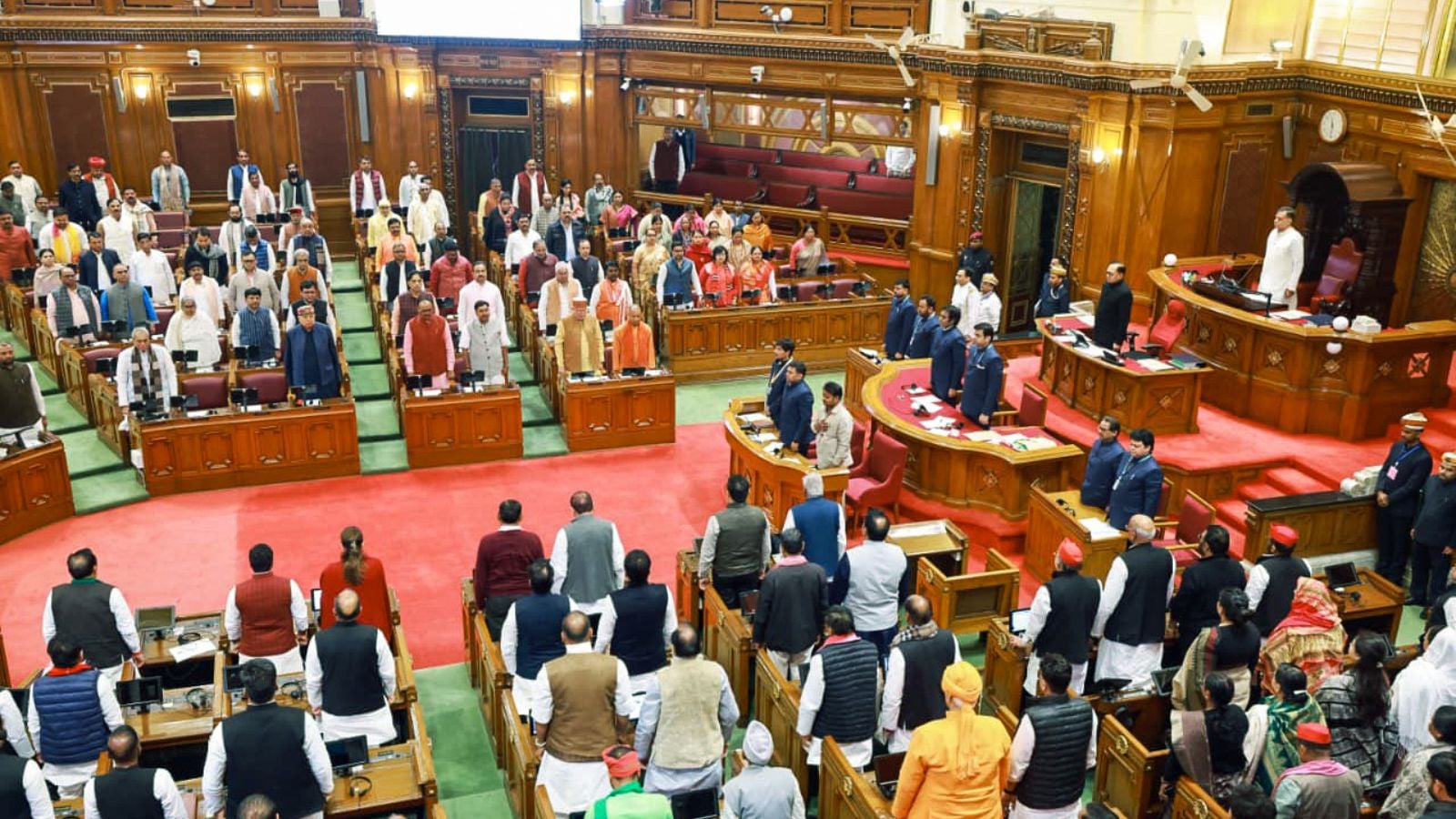
Puri was responding to concerns raised by Rahul Gandhi, Leader of Opposition in Lok Sabha, who sought a discussion on the issue.
“This war is going to have far-reaching consequences… The pain has just started. Restaurants are closing, there’s widespread panic about LPG, street vendors are affected…this is only the beginning. The foundation of every single nation is its energy security…allowing the US to decide who we buy oil from, who we buy gas from, whether we can buy oil from Russia or not, whether our relationship with different oil suppliers can be decided by us, this is what has been bartered,” Rahul said.
Saying that the government was responding in a way that illustrated the “sharpest relief” possible, Puri said: “This is not the moment for rumour-mongering or fake narratives. India is navigating the most severe global energy disruption in recorded history. Crude supply is flowing. Gas is prioritised for homes and farms. LPG production has been stepped up…Consumer prices are held far below what markets… would dictate.”
He called for the country to “stand united behind its energy warriors, behind the institutions managing this crisis, and behind national interest.”
Puri also sought to contrast India’s response to the situation in its neighbourhood.
“Thanks to the honourable Prime Minister’s outstanding diplomatic outreach and goodwill, India has secured crude volumes that exceed what the disrupted Strait route would have delivered in the same period. Non-Hormuz sourcing has risen to approximately 70% of crude imports, up from 55% before the conflict began,” he said.
He said India now sources crude from 40 countries, up from 27 in 2006-07, even as its own refineries “are operating at high capacity utilisation”.
“There is no shortage of petrol, diesel, kerosene, ATF… The availability of petrol, diesel, aviation turbine fuel, kerosene, and fuel oil is fully assured. Retail outlets across the country are stocked and supply chains for these products are functioning normally,” he said.
Puri said natural gas supply has been “managed through prioritised allocation”, domestic piped gas to homes and CNG for vehicles received “100 per cent supply with no cuts”, while industrial and manufacturing consumers will receive upto 80 per cent of their previous six-month average. “Fertiliser plants will receive up to 70 per cent, protecting the agricultural input chain ahead of the sowing season. Refineries and petrochemical units absorb a managed reduction, with that gas redirected to higher-priority sectors,” he said.
Amid growing concerns over liquefied petroleum gas (LPG) — cooking gas — supplies in the country, which have been hit due to the West Asia conflict, the government is activating other fuel options like kerosene, fuel oil, biomass and even coal to ease pressure on LPG for commercial users like restaurants and hotels.
The government has also decided to allocate for commercial use 20% of the average monthly commercial LPG requirement; this will be done in coordination with state governments. Moreover, as a demand management measure amid panic booking by household consumers, the minimum gap between cylinder bookings by households in rural and remote areas has been increased to 45 days, while for urban households, it continues to be 25 days. The minimum gap used to be 21 days earlier, but was increased to 25 days after the conflict started.
Noting that bookings for LPG cylinders have shot up multifold due to misinformation and concern, the government also appealed to consumers to not fall prey to panic and avoid rush-booking of cylinders.
“Alternate fuel options are being activated to ease pressure on LPG and gas channels. Kerosene is being made available through retail outlets and PDS channels, and fuel oil is being made available for industrial and commercial consumers. The MoEFCC (Ministry of Environment, Forest and Climate Change) has advised State Pollution Control Boards to permit, for the duration of this crisis period, the use of biomass, RDF (Refuse-derived fuel) pellets, and kerosene/ coal as alternate fuels for the hospitality and restaurant segment for one month, which would enable a wider range of establishments to switch and free up LPG for priority consumers,” Union Petroleum Minister Hardeep Singh Puri said in Lok Sabha.
In a briefing, Petroleum Ministry Joint Secretary Sujata Sharma said that in addition to the standard quarterly allocation of 1 lakh kilolitres, the government has released an additional 48,000 kilolitres of kerosene to state governments for distribution to identified beneficiaries. She said the Ministry of Coal has directed Coal India and Singareni Collieries Company to allot higher quantities of coal to states for use by small and medium consumers.
The effective halt in maritime traffic through the crucial chokepoint of the Strait of Hormuz has significantly impacted India’s LPG imports. The country depends on imports to meet around 60% of its LPG requirement, and 90% of the LPG imports come from West Asia through the Strait. This effectively means that roughly 55% of India’s LPG consumption volumes are currently unavailable.
Given the crisis, the government has invoked the Essential Commodities Act to prioritise LPG supplies to households over commercial and industrial consumers, ordered refiners to maximise LPG production, and directed them to divert propane, butane, and other streams from petrochemical production to LPG production. In the commercial segment, hospitals and educational institutions have been placed on uninterrupted priority supply; their access to LPG is fully assured regardless of broader demand conditions, the government said.
India has over 33 crore domestic LPG consumers. According to Sharma, measures to augment LPG supplies have already led to a 28% increase in domestic LPG output vis-à-vis the pre-conflict levels, and all of it is being diverted to meet household consumption demand.
“Commercial LPG has been regulated to prevent black marketing, not to penalise the hospitality sector. Commercial LPG is sold in a completely deregulated, over-the-counter market at market price, without any government subsidy. There is no registration system, no booking requirement, no digital authentication, and no delivery confirmation mechanism. Any business or individual can purchase cylinders in any quantity at the point of sale, with no government control in normal times. In a supply-constrained environment where public anxiety is elevated, this deregulated structure creates a direct and uncontrolled pathway for hoarding, diversion, and resale at inflated prices. Had commercial supply been left entirely unrestricted, cylinders purchased over the counter could have been diverted to the grey market at the expense of genuine commercial consumers and domestic households alike,” Puri told Parliament.
“The government has therefore taken the responsible course: to regulate this channel with clear priorities and a transparent allocation mechanism. A three-member committee comprising executive directors from IOCL, HPCL and BPCL was constituted on March 9, 2026. Extensive meetings have been held with state civil supply departments and restaurant associations across the country, and are continuing. The committee has assessed genuine need by geography and sector to ensure available commercial volume reaches genuine users first. In a major decision, 20% of the average monthly commercial LPG requirement will be allocated from today by OMCs, in coordination with the state governments so that there is no hoarding or black marketing,” the minister said.
Sharma told reporters that district-level committees are being established to monitor the supply situation and prevent diversion. State governments have also been asked to take strict action against hoarding and black-marketing. She said that none of the LPG dealerships across India have gone dry, and that household cylinder supply levels continue to remain at pre-conflict levels. Field officers of oil marketing companies (OMCs) and the Anti-Adulteration Cell are coordinating enforcement at the LPG distributor level to check diversion.
“Field reports indicate hoarding and panic-booking at the distributor and retail level, driven by consumer anxiety rather than any actual supply shortage. The House should be clear on this: the rush-booking pressure in some localities reflects a demand distortion, not a production or supply failure,” Puri said in Parliament.
He asserted that India’s crude and gas supplies remain “secure”, and there is no shortage of petrol, diesel, kerosene, or aviation turbine fuel. The government’s foremost priority is to ensure that the kitchens of over 33 crore families, especially the poor and the underprivileged, don’t face any shortage of gas, he said, adding that “domestic supply is fully protected and the delivery cycle is unchanged”.
Puri was responding to concerns raised by Rahul Gandhi, Leader of Opposition in Lok Sabha, who sought a discussion on the issue.
“This war is going to have far-reaching consequences… The pain has just started. Restaurants are closing, there’s widespread panic about LPG, street vendors are affected…this is only the beginning. The foundation of every single nation is its energy security…allowing the US to decide who we buy oil from, who we buy gas from, whether we can buy oil from Russia or not, whether our relationship with different oil suppliers can be decided by us, this is what has been bartered,” Rahul said.
Saying that the government was responding in a way that illustrated the “sharpest relief” possible, Puri said: “This is not the moment for rumour-mongering or fake narratives. India is navigating the most severe global energy disruption in recorded history. Crude supply is flowing. Gas is prioritised for homes and farms. LPG production has been stepped up…Consumer prices are held far below what markets… would dictate.”
He called for the country to “stand united behind its energy warriors, behind the institutions managing this crisis, and behind national interest.”
Puri also sought to contrast India’s response to the situation in its neighbourhood.
“Thanks to the honourable Prime Minister’s outstanding diplomatic outreach and goodwill, India has secured crude volumes that exceed what the disrupted Strait route would have delivered in the same period. Non-Hormuz sourcing has risen to approximately 70% of crude imports, up from 55% before the conflict began,” he said.
He said India now sources crude from 40 countries, up from 27 in 2006-07, even as its own refineries “are operating at high capacity utilisation”.
“There is no shortage of petrol, diesel, kerosene, ATF… The availability of petrol, diesel, aviation turbine fuel, kerosene, and fuel oil is fully assured. Retail outlets across the country are stocked and supply chains for these products are functioning normally,” he said.
Puri said natural gas supply has been “managed through prioritised allocation”, domestic piped gas to homes and CNG for vehicles received “100 per cent supply with no cuts”, while industrial and manufacturing consumers will receive upto 80 per cent of their previous six-month average. “Fertiliser plants will receive up to 70 per cent, protecting the agricultural input chain ahead of the sowing season. Refineries and petrochemical units absorb a managed reduction, with that gas redirected to higher-priority sectors,” he said.