
War overtakes civil unrest as top political violence risk for firms; critical to mitigate global risks in business ecosystems: Allianz report
US-Iran conflict likely to have a major impact on risk mitigation, pushing demand for political violence and terrorism insurance market, says the report
Businesses are currently more worried about war as a political violence risk than civil unrest, as conflicts in Europe and West Asia disrupt global trade and increase risks for companies’ operations and assets, according to Allianz Risk Barometer 2026.
In the ‘gray zone’ between peace and open warfare, threat actors are leveraging technology, criminal networks and disinformation to attack critical infrastructure, high-profile companies and individuals, blurring the lines between state and non-state actors while undermining detection efforts, Munich-based Allianz said in its ‘Political violence and civil unrest trends 2026’ report.
“Deteriorating social cohesion is contributing to rising civil unrest worldwide, with protests triggered by economic, political, and social concerns,” it said. While hardship is a major driver, analysis by Allianz shows unrest is not confined to fragile states, with resilient economies like France and Germany experiencing some of the most frequent protests, it said.
Although terrorism fell overall in 2025, it surged in the West, driven by polarization, antisemitism, Islamophobia and far-right activities. “The war in Iran has intensified the terror risk, while extremist groups in sub-Saharan Africa continue to exploit security vacuums. Meanwhile, algorithmic amplification on digital platforms accelerates youth radicalization,” Allianz report said.
Volatility in uncertain times
“The world is experiencing one of the most volatile geopolitical periods in our history since the end of World War Two. These are unsettling times. Even before the current conflict in West Asia, the risks posed by political violence and civil unrest had been intensifying, evolving into global challenges that impact companies, communities, and the wider economy,” said Thomas Lillelund, CEO, Allianz Commercial. As we navigate this era of heightened uncertainty, understanding the implications of these risks and mitigating them in our interconnected business ecosystems has never been more critical, Lillelund said.
Ongoing conflicts, such as the US-Iran conflict, war in Ukraine and other tensions in West Asia, have heightened global security concerns, disrupted trade routes, and strained global alliances, the report said.
The rise in unilateral actions, such as the removal of Venezuela’s President Nicolás Maduro, could embolden adversarial states, undermining geopolitical and economic stability through 2026 and beyond. The repercussions of the US-Iran conflict on the political violence and terrorism risk landscape are significant, it said.
Terrorism insurance market takes a hit
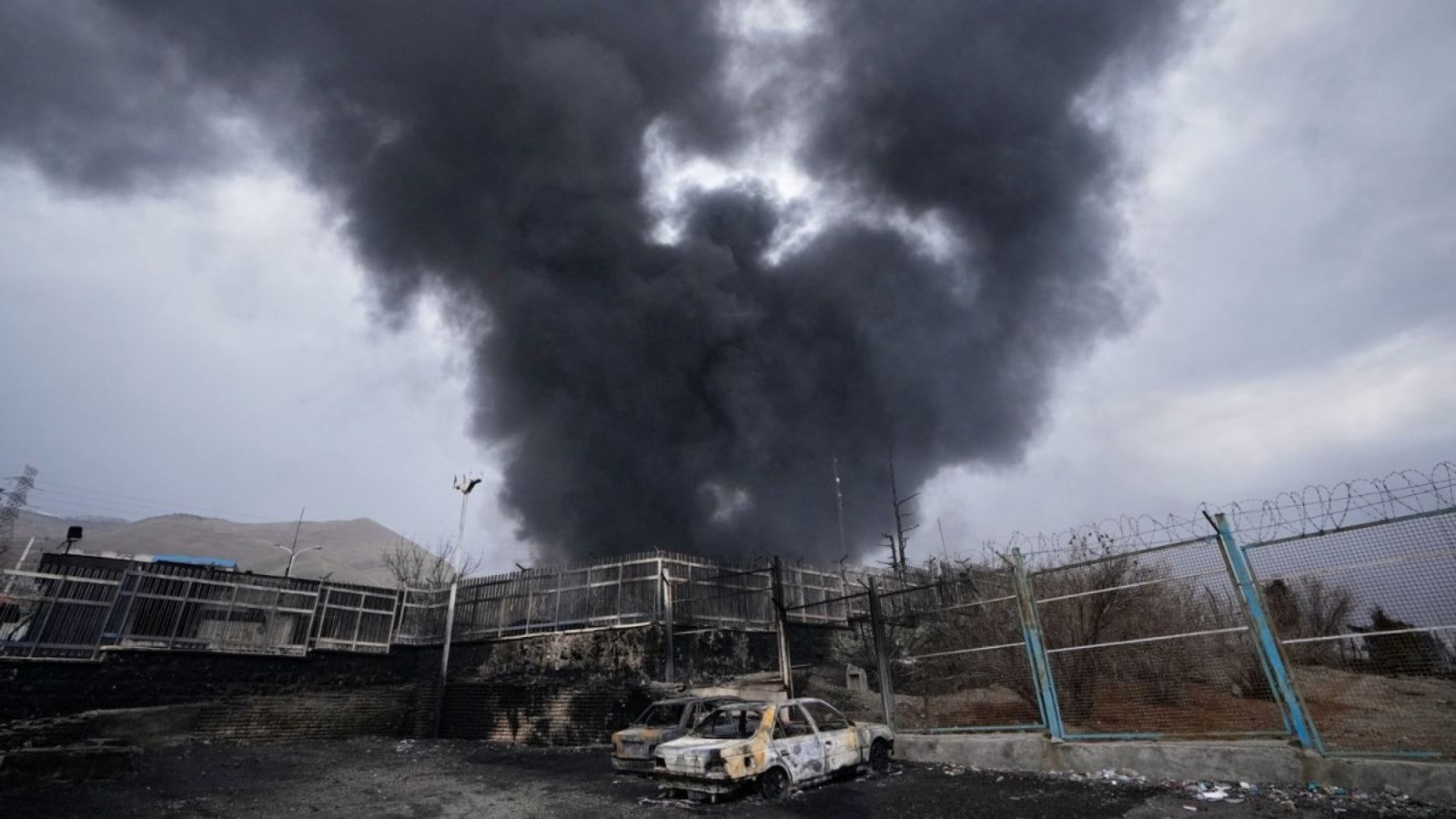
Notwithstanding the human toll of the conflict, the political violence and terrorism (PVT) insurance market in West Asia has also been severely impacted, with losses concentrated in key sectors like oil, gas and transportation, stated the report. “Damaged infrastructure could take years to repair, and the region’s risk assessment has shifted to medium-to-high, with some industries now considered high to extreme. The loss quantum has the potential to result in a costlier event than PVT claims resulting from the war in Ukraine,” it said.
Meanwhile, heightened risk of strikes, riots, and civil unrest is to be expected, particularly in countries heavily reliant on Middle Eastern oil and gas, it said. “Nations with robust mechanisms to manage food and fuel price shocks may mitigate these risks, while others face elevated threats of rationing, unrest, and looting. Businesses impacted by armed conflict face significant challenges, including supply chain disruptions, loss of market access, cyber-attacks, and sabotage,” it said.
Even before the Iran war, it is estimated that business assets had seen over 20% rise in exposure to conflict over the past five years. “Organized crime is also on the rise, exploiting instability in conflict zones and engaging in cross-border sabotage and other ‘gray zone’ activities,” it said.
The US-Iran conflict is also likely to have a significant impact on risk mitigation moving forward, accelerating demand for PVT insurance, but also risk management and supply chain mitigation strategies such as nearshoring and friendshoring and supplier diversification, the report said.
Businesses are currently more worried about war as a political violence risk than civil unrest, as conflicts in Europe and West Asia disrupt global trade and increase risks for companies’ operations and assets, according to Allianz Risk Barometer 2026.
In the ‘gray zone’ between peace and open warfare, threat actors are leveraging technology, criminal networks and disinformation to attack critical infrastructure, high-profile companies and individuals, blurring the lines between state and non-state actors while undermining detection efforts, Munich-based Allianz said in its ‘Political violence and civil unrest trends 2026’ report.
“Deteriorating social cohesion is contributing to rising civil unrest worldwide, with protests triggered by economic, political, and social concerns,” it said. While hardship is a major driver, analysis by Allianz shows unrest is not confined to fragile states, with resilient economies like France and Germany experiencing some of the most frequent protests, it said.
Although terrorism fell overall in 2025, it surged in the West, driven by polarization, antisemitism, Islamophobia and far-right activities. “The war in Iran has intensified the terror risk, while extremist groups in sub-Saharan Africa continue to exploit security vacuums. Meanwhile, algorithmic amplification on digital platforms accelerates youth radicalization,” Allianz report said.
Volatility in uncertain times
“The world is experiencing one of the most volatile geopolitical periods in our history since the end of World War Two. These are unsettling times. Even before the current conflict in West Asia, the risks posed by political violence and civil unrest had been intensifying, evolving into global challenges that impact companies, communities, and the wider economy,” said Thomas Lillelund, CEO, Allianz Commercial. As we navigate this era of heightened uncertainty, understanding the implications of these risks and mitigating them in our interconnected business ecosystems has never been more critical, Lillelund said.
Ongoing conflicts, such as the US-Iran conflict, war in Ukraine and other tensions in West Asia, have heightened global security concerns, disrupted trade routes, and strained global alliances, the report said.
The rise in unilateral actions, such as the removal of Venezuela’s President Nicolás Maduro, could embolden adversarial states, undermining geopolitical and economic stability through 2026 and beyond. The repercussions of the US-Iran conflict on the political violence and terrorism risk landscape are significant, it said.
Terrorism insurance market takes a hit
Notwithstanding the human toll of the conflict, the political violence and terrorism (PVT) insurance market in West Asia has also been severely impacted, with losses concentrated in key sectors like oil, gas and transportation, stated the report. “Damaged infrastructure could take years to repair, and the region’s risk assessment has shifted to medium-to-high, with some industries now considered high to extreme. The loss quantum has the potential to result in a costlier event than PVT claims resulting from the war in Ukraine,” it said.
Meanwhile, heightened risk of strikes, riots, and civil unrest is to be expected, particularly in countries heavily reliant on Middle Eastern oil and gas, it said. “Nations with robust mechanisms to manage food and fuel price shocks may mitigate these risks, while others face elevated threats of rationing, unrest, and looting. Businesses impacted by armed conflict face significant challenges, including supply chain disruptions, loss of market access, cyber-attacks, and sabotage,” it said.
Even before the Iran war, it is estimated that business assets had seen over 20% rise in exposure to conflict over the past five years. “Organized crime is also on the rise, exploiting instability in conflict zones and engaging in cross-border sabotage and other ‘gray zone’ activities,” it said.
The US-Iran conflict is also likely to have a significant impact on risk mitigation moving forward, accelerating demand for PVT insurance, but also risk management and supply chain mitigation strategies such as nearshoring and friendshoring and supplier diversification, the report said.