

‘In favour of a rules-based world order’: Austrian Chancellor Christian Stocker backs PM Modi’s call for ‘lasting peace’
Marking the first visit by an Austrian Chancellor in 40 years, the two nations expanded cooperation in the nursing sector and academic research through a partnership with IIT Delhi.
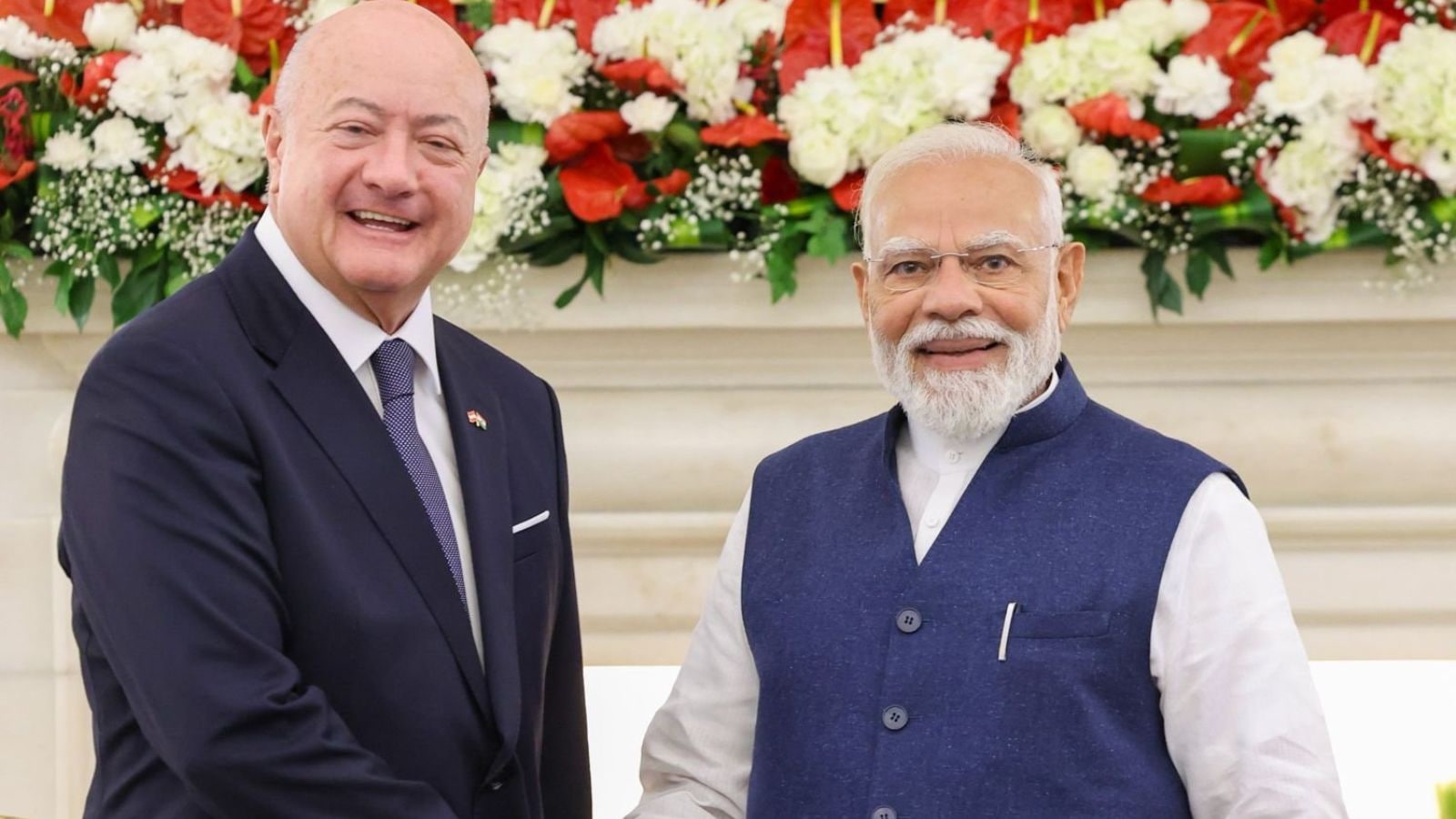
Prime Minister Narendra Modi on Thursday advocated for a “lasting peace” in West Asia, adding that military conflict could not solve problems. The PM made these remarks after a bilateral meeting with visiting Austrian Chancellor Christian Stocker, who is on his maiden visit to India as well as Asia.
PM Modi said, “Today, the entire world is passing through a very grave and tense situation, and its impact is being felt by us all. In such a tense global environment, India and Austria share the conviction that military conflict cannot provide a solution to problems. Be it Ukraine or West Asia, we advocate for a stable, sustainable, and lasting peace.”
This has been New Delhi’s lasting stand on the conflicts in Gaza and Ukraine, and the PM has now taken a similar stand on the US-Israel war on Iran.
Echoing PM Modi’s remarks, the Austrian Chancellor said, “We are living in an age of geopolitical upheaval and disruption. Power centres are shifting and new alliances are being created… conflicts are becoming more complex. In these circumstances, India is a reliable partner, and valued by Austria. Together, we represent an international order in which we can live in freedom and security. We are in favour of a rules-based world order and not a world in which might is right.”
This is the second high-level political visit by a European leader since the war in Tehran began on February 28 — the first being in early March when Finland’s President Alexander Stubb visited for the Raisina dialogue. The Austrian Chancellor is visiting India from April 14 to 18, and met External Affairs Minister S Jaishankar on Wednesday.
Pressing that the first visit of an Austrian Chancellor to India in over four decades was of “immense significance”, Modi said, “Following the historic India-European Union Free Trade Agreement of 2026, a new golden chapter has begun in the relations between India and the EU. Through Chancellor Stocker’s visit, we are now ushering India-Austria relations into a new era as well.”
PM Modi also highlighted the significance of the Austrian Chancellor’s visit to India after four decades, calling it an important milestone in bilateral ties. The Prime Minister added that following the India-EU Free Trade Agreement, a new chapter has begun in India-EU relations.
“We are pleased that India is your first destination outside Europe. This reflects your strong commitment to your vision and to strengthening India-Austria relations. The Austrian Chancellor’s visit to India after four decades is highly significant. Following the India-European Union Free Trade Agreement, a new chapter has begun in India-EU relations,” PM Modi said.
In his remarks at the joint statement, Stocker, who is on an official visit to India from April 14 to 17, said that the common response to multiple crises must be to build alliances and seek greater partnerships with those who think like us.
“We are living in an age of geopolitical upheaval and disruption. Power centres are shifting and new alliances are being created,” said Stocker, who is on his first visit to Asia.
He added, “Conflicts are becoming more complex. In these circumstances, India is a reliable partner and valued by Austria. Together, we represent an international order in which we can live in freedom and security. We are in favour of a rules-based world order and not a world in which might is right.”
“We need to reduce dependencies and explore new markets,” he said, adding that India is among the biggest trading partners for Austria outside Europe, with trade touching $3 billion.
Stocker is visiting India at the invitation of PM Modi, and is accompanied by a high-level delegation comprising Economy and Energy Minister Wolfgang Hattmannsdorfer, senior officials and business leaders.
Stay updated with the latest - Click here to follow us on Instagram
Prime Minister Narendra Modi on Thursday advocated for a “lasting peace” in West Asia, adding that military conflict could not solve problems. The PM made these remarks after a bilateral meeting with visiting Austrian Chancellor Christian Stocker, who is on his maiden visit to India as well as Asia.
PM Modi said, “Today, the entire world is passing through a very grave and tense situation, and its impact is being felt by us all. In such a tense global environment, India and Austria share the conviction that military conflict cannot provide a solution to problems. Be it Ukraine or West Asia, we advocate for a stable, sustainable, and lasting peace.”
This has been New Delhi’s lasting stand on the conflicts in Gaza and Ukraine, and the PM has now taken a similar stand on the US-Israel war on Iran.
Echoing PM Modi’s remarks, the Austrian Chancellor said, “We are living in an age of geopolitical upheaval and disruption. Power centres are shifting and new alliances are being created… conflicts are becoming more complex. In these circumstances, India is a reliable partner, and valued by Austria. Together, we represent an international order in which we can live in freedom and security. We are in favour of a rules-based world order and not a world in which might is right.”
This is the second high-level political visit by a European leader since the war in Tehran began on February 28 — the first being in early March when Finland’s President Alexander Stubb visited for the Raisina dialogue. The Austrian Chancellor is visiting India from April 14 to 18, and met External Affairs Minister S Jaishankar on Wednesday.
Pressing that the first visit of an Austrian Chancellor to India in over four decades was of “immense significance”, Modi said, “Following the historic India-European Union Free Trade Agreement of 2026, a new golden chapter has begun in the relations between India and the EU. Through Chancellor Stocker’s visit, we are now ushering India-Austria relations into a new era as well.”
PM Modi also highlighted the significance of the Austrian Chancellor’s visit to India after four decades, calling it an important milestone in bilateral ties. The Prime Minister added that following the India-EU Free Trade Agreement, a new chapter has begun in India-EU relations.
“We are pleased that India is your first destination outside Europe. This reflects your strong commitment to your vision and to strengthening India-Austria relations. The Austrian Chancellor’s visit to India after four decades is highly significant. Following the India-European Union Free Trade Agreement, a new chapter has begun in India-EU relations,” PM Modi said.
In his remarks at the joint statement, Stocker, who is on an official visit to India from April 14 to 17, said that the common response to multiple crises must be to build alliances and seek greater partnerships with those who think like us.
“We are living in an age of geopolitical upheaval and disruption. Power centres are shifting and new alliances are being created,” said Stocker, who is on his first visit to Asia.
He added, “Conflicts are becoming more complex. In these circumstances, India is a reliable partner and valued by Austria. Together, we represent an international order in which we can live in freedom and security. We are in favour of a rules-based world order and not a world in which might is right.”
“We need to reduce dependencies and explore new markets,” he said, adding that India is among the biggest trading partners for Austria outside Europe, with trade touching $3 billion.
Stocker is visiting India at the invitation of PM Modi, and is accompanied by a high-level delegation comprising Economy and Energy Minister Wolfgang Hattmannsdorfer, senior officials and business leaders.